Archiv der Kategorie: Mediathek – Volkers Klassikseiten J.S. Bach

J.S. Bach – Kantate BWV 79 „Gott der Herr ist Sonn und Schild“


J.S. Bach – Kantate BWV 79 „Gott der Herr ist Sonn und Schild“

„Gott der Herr ist Sonn und Schild“ (BWV 79) ist eine Kirchen-Kantate von Johann Sebastian Bach. Er komponierte sie in Leipzig für das Reformationsfest und führte sie am 31. Oktober 1725 erstmals auf.

Fehler
Dieses Video existiert nicht


J.S. Bach komponierte die Kantate in seinem dritten Amtsjahr in Leipzig. Die vorgeschriebenen Lesungen für den Festtag waren 2 Thess 2,3–8 LUT, Mahnung zur Standhaftigkeit gegen die Widersacher, und Offb 14,6–8 LUT, „Fürchtet Gott und gebet ihm die Ehre“.

Ein unbekannter Textdichter ging nicht auf die Lesungen ein, sondern behandelte den festlichen Anlass, beginnend mit einem Psalmvers, Psalm 84,11 LUT. Als Satz 3 bezog er die erste Strophe von Martin Rinckarts Lied „Nun danket alle Gott“ ein und als Schlusschoral die letzte Strophe von Ludwig Helmbolds „Nun lasst uns Gott dem Herren“.

Bach führte die Kantate am 31. Oktober 1725 erstmals auf. Für eine weitere Aufführung, wahrscheinlich 1730, änderte er die Instrumentierung, indem er die Oboen durch Flöten verdoppelte und in der Alt-Arie die Flöte als Obligat-Instrument einsetzte. Er benutzte die Musik des Eingangschors und des Duetts in seiner Missa in G, BWV 236 und die der Alt-Arie in der Missa in A, BWV 234.

Die Kantate ist besetzt mit drei Vokalsolisten, Sopran, Alt und Bass, vierstimmigem Chor, zwei Hörnern, Pauken, zwei Flauti traversi, zwei Oboen, zwei Violinen, Viola und Basso continuo.

1. Coro: Gott, der Herr, ist Sonn und Schild
2. Aria (Alt): Gott ist unser Sonn und Schild
3. Choral: Nun danket alle Gott
4. Recitativo (Bass): Gottlob! Wir wissen den rechten Weg zur Seligkeit
5. Duetto (Sopran, Bass): Gott, ach Gott, verlaß die Deinen nimmermehr
6. Choral: Erhalt uns in der Wahrheit

John Eliot Gardiner, der die Kantaten zum Reformationsfest in der Schlosskirche Wittenberg dirigierte, wo die Reformation begann, beschreibt den Eingangschor als einen feierlichen Einzug und hört die „insistierenden Paukenschläge“ (insistent drum beat) zu den Hornfanfaren als das Hämmern von Luthers Thesen.

Die instrumentale Einleitung stellt zwei Themen vor, ein festliches marschartiges Thema für Hörner und Pauken, und ein lebhafteres Gegenthema, das von einer oft wiederholten Note ausgeht. Die folgende Arie bringt ähnliche Gedanken wie der Eingangschor, jedoch in persönlicher ruhiger Färbung.

In Satz 3, dem ersten Choral, benutzt Bach erneut das erste Thema des ersten Satzes, gleichzeitig mit der Choralmelodie. Helmuth Rilling bemerkt die thematische Einheit, „Preis und Dank“, der ersten drei Sätze. Gardiner vermutete, dass nach diesem Choral die Predigt gehalten wurde. Das einzige Rezitativ wird vom Bass gesungen und erwähnt den Anlass für Preis und Dank: „Du hast uns durch dein Wort gewiesen“, in einem Hinweis auf ein zentrales Anliegen der Reformation, wie Helmuth Rilling hervorhebt.

Die Kantate endet mit einem schlichten vierstimmigen Choralsatz, der um Wahrheit und Freiheit bittet.

Ausführende:

Collegium Vocale Gent

Sopran: Dorothea Mields
Altus: Alex Potter
Tenor: Thomas Hobbs
Bass: Peter Kooij

Conductor: Philippe Herreweghe

Aufnahme aus dem Concertgebouw Brügge 2017
—————————–

Language English

J.S. Bach – Cantata BWV 79 „Gott der Herr ist Sonn und Schild“ („God the Lord is Sun and Shield“)

„God the Lord is Sun and Shield“ (BWV 79) is a church cantata by Johann Sebastian Bach. He composed them in Leipzig for the Reformation and led them on 31 October 1725 for the first time.

J.S. Bach composed the cantata in his third year in Leipzig. The prescribed readings for the feast day were 2 Thess 2,3-8 LUT, admonition for steadfastness against the adversaries, and Rev 14,6-8 LUT, „Fear God and give him the glory.“

An unknown librettist did not respond to the readings, but treated the festive occasion, starting with a psalm verse, Psalm 84.11 LUT. As movement 3, he included the first verse of Martin Rinckart’s song „Nun danket alle Gott“ and, as final chorale, the last stanza of Ludwig Helmbold’s „Nun let’s God the Lord“.

Bach performed the cantata on October 31, 1725 for the first time. For another performance, probably in 1730, he changed the instrumentation by doubling the oboes with flutes and used in the alto-aria the flute as Obligat instrument. He used the music of the entry chorus and duet in his Missa in G, BWV 236 and that of the alto aria in the Missa in A, BWV 234.

The cantata is composed of three vocal soloists, soprano, alto and bass, four-part choir, two horns, timpani, two flauti traversi, two oboes, two violins, viola and basso continuo.

1. Coro: God, the Lord, is Sun and Shield
2. Aria (Old): God is our sun and shield
3. Chorale: Now thank all God
4. Recitative (bass): Thank goodness! We know the right way to salvation
5. Duetto (soprano, bass): God, oh God, never leave yours
6. Chorale: Receive us in the truth

John Eliot Gardiner, who conducted the cantatas for the Reformation Festival in Wittenberg Castle Church, where the Reformation began, describes the opening chorus as a solemn entry and hears the „insistent drum beats“ to the horn fanfares as the hammering of Luther’s theses.

The instrumental introduction introduces two themes, a festive march-like theme for horns and timpani, and a livelier counter-theme that starts with an often-repeated note. The following aria brings similar thoughts to the opening chorus, but in a personal calm color.

In movement 3, the first chorale, Bach again uses the first theme of the first movement, simultaneously with the chorale melody. Helmuth Rilling notes the thematic unity, „Price and Thanks,“ the first three movements. Gardiner guessed that the sermon was being delivered after this chorale. The only recitative is sung by the bass and mentions the occasion for price and thanks: „You have shown us by your word,“ pointing to a central concern of the Reformation, as Helmuth Rilling points out.

The cantata ends with a simple four-part chorale that asks for truth and freedom.

Fehler
Dieses Video existiert nicht

——————————–

Performed by:

Collegium Vocale Gent

Soprano: Dorothea Mields
Altus: Alex Potter
Tenor: Thomas Hobbs
Bass: Peter Kooij

Conductor: Philippe Herreweghe

Recording from the Concertgebouw Bruges 2017
—————————-
J.S. Bach – BWV 1069 „Orchester-Suite Nr. 4 D-Dur“


J.S. Bach – BWV 1069 „Orchester-Suite Nr. 4 D-Dur“

Vier Orchestersuiten sind von  Johann Sebastian Bach erhalten (BWV 1066–1069). Es handelt sich jeweils um eine Folge von Tanzsätzen mit einer vorangestellten Ouvertüre. Da Bach diesen Suiten keine besondere Überschrift gab, werden sie auch heute nach der Überschrift des ersten Satzes oft schlicht „Ouvertüren“ genannt.

Fehler
Dieses Video existiert nicht


Die vier Kompositionen sind unabhängig voneinander überliefert, bilden also nicht etwa einen Zyklus. Autographe Partituren liegen nicht vor, sondern lediglich Abschriften der Einzelstimmen. Daher war eine Datierung lange nicht möglich. Als sicher gilt, dass Bach die Werke ab 1723 im Rahmen seiner Konzerte mit dem Collegium Musicum in Leipzig aufführte.

Besetzung:
Trompete I/II/III
Pauken
Oboe I/II/III
Fagott
Violine I/II
Viola
Basso continuo

Sätze:
Ouverture c – 9/8 – c
Bourrée I c D-Dur
– Bourrée II ¢ h-Moll
Gavotte c D-Dur
Menuett I 3/4 D-Dur
– Menuett II 3/4 D-Dur
Réjouissance 3/4 D-Dur

Entstehung:
Außer in den ersten drei Takten der Ouvertüre verwendet Bach die Trompeten nur zur Dopplung anderer Instrumente; daher wurde bereits vermutet, dass eine Urform ganz ohne Trompeten auskam. Da die Originalpartitur nicht erhalten ist, bleibt dies allerdings etwas spekulativ.

Zur Datierung gibt nur die – sicher spätere – Überarbeitung der Ouvertüre in seiner Kantate Unser Mund sei voll Lachens (BWV 110) einen Anhaltspunkt: Hier fügt Bach in den fugierten Mittelteil einen vierstimmigen Chorsatz hinzu. Diese Kantate wurde am 1. Weihnachtstag 1725 aufgeführt; da Bach sich in seinen ersten Leipziger Jahren vor allem auf die Kantatenkomposition konzentrierte, ist – ähnlich wie bei der ersten Suite – anzunehmen, dass er die Partitur aus Köthen oder Weimar mitgebracht hatte.

Ouvertüre:
Im Gegensatz zur dritten Ouvertüre sind die Oboen obligat, und so werden hier die Instrumentalgruppen gleich am Beginn deutlich voneinander getrennt und gegeneinander eingesetzt. Das Fugato verwendet ein eher unscheinbares Thema in kontinuierlicher Triolenbewegung, dessen charakteristischer Kontrapunkt aus Tonwiederholungen im punktierten Rhythmus verständlich macht, warum Bach später auf diesen Satz zurückgriff, um das Lachen zu illustrieren. Ein erster Soloabschnitt beschäftigt nur die Holzbläser, führt aber kein weiteres Themenmaterial ein. Ein zweiter Soloabschnitt stellt die Einzelchöre vor, lässt sie sich wieder vereinigen und führt sie dann in längeren Passagen gegeneinander, wobei besonders auch die langen motivischen Triolenketten im Bass auffallen. Die dritte Solopassage ist den Streichern vorbehalten, ehe die Oboen wieder hinzutreten und den Abschnitt mit einer weiteren angedeuteten Themendurchführung zu Ende bringen. Der abschließende punktierte Teil ist keine wörtliche Wiederaufnahme des Anfangs, verwendet aber das gleiche Motivmaterial und führt die Instrumentalgruppen mit ähnlicher Intensität gegeneinander. Auffällig ist hier besonders zu Beginn die stark dissonante, ausdrucksvolle Harmonik.

Tänze:
Die erste Bourrée setzt den Oboen- und den Streicherchor konsequent gegeneinander ein und lässt die Themenabschnitte abwechselnd vortragen, wobei die jeweils andere Gruppe an den Schlüssen kleine fanfarenartige Motive einstreut. Bourrée II (in der parallelen Molltonart) besteht aus klagender, vorhaltbetonter Oboenmelodie über einem witzig-virtuosen Fagottsolo, mit einem kleinen wischenden Einwurfmotiv der Streicher.

In der Gavotte wird die erste Themenhälfte gemeinsam vorgetragen, die zweite besteht aus einem Bassmotiv, über das die Oboen und hohen Streicher abwechselnd schlichte Viertel tupfen.

Das Menuett bildet den Ruhepol und gibt sich eher konventionell. Im ersten Satz doppeln die Oboen die Streicher, im Trio bleiben die Streicher alleine.

Die abschließende Réjouissance treibt ein sehr ungewöhnliches Spiel mit Melodik und Periodik, wie man es eher bei einem Komponisten der nächsten Generation erwarten würde. Eine ausdrucksvolle, weite Intervalle bevorzugende Oberstimme wird von einem stellenweise imitierenden Bass und schlichten, harmonisch ausfüllenden Mittelstimmen gestützt; der zweite Teil teilt die beiden Instrumentalgruppen wieder und enthält geradezu durchführungsartige Züge, besonders in einer Passage vor der Wiederaufnahme des Thema, die exzessive Chromatik auf einem Orgelpunkt einsetzt.

Ausführende:
Collegium Vocale Gent
Trompete: Rudolf Lörinc;   Moritz Görg;  Tibor Mészáros
Conductor: Philippe Herreweghe

Aufnahme aus dem Concertgebouw Brügge 2017
—————————–

Language: English

J.S. Bach – BWV 1069 „Orchestra Suite No. 4 in D major“

Four orchestral suites have been preserved by Johann Sebastian Bach (BWV 1066-1069). Each is a sequence of dance movements with a leading overture. Since Bach did not give these suites a special title, they are often referred to as „overtures“ even today, according to the title of the first movement.

The four compositions are handed down independently of each other, so they do not form a cycle. Autograph scores are not available, but only copies of the individual parts. Therefore, a dating was not possible for a long time. It is certain that Bach performed the works from 1723 as part of his concerts with the Collegium Musicum in Leipzig.

Occupation:
Trumpet I / II / III
swot
Oboe I / II / III
bassoon
Violin I / II
viola
Basso continuo

Sentences:
Overture c – 9/8 – c
Bourrée I c D major
– Bourrée II in B minor
Gavotte c D major
Minuet I 3/4 D major
– Minuet II 3/4 D major
Réjouissance 3/4 D major

Origin:
Apart from the first three bars of the overture, Bach uses the trumpets only to duplicate other instruments; Therefore, it was already suspected that a primordial made without trumpets. Since the original score is not preserved, this remains somewhat speculative.

For dating, only the – certainly later – revision of the overture in his cantata Our mouth is full of laughter (BWV 110) is a clue: Here Bach adds a four-part chorus in the fugal middle section. This cantata was performed on Christmas Day 1725; Since Bach concentrated primarily on cantata composition in his first years in Leipzig, it must be assumed – as in the first suite – that he had brought the score from Köthen or Weimar.

Overture:
In contrast to the third overture, the oboes are obligatory, and so the instrumental groups are clearly separated and used against each other right at the beginning. The Fugato uses a rather inconspicuous theme in a continuous triplet movement, whose characteristic counterpoint of tone repetitions in dotted rhythms makes it understandable why Bach later resorted to this sentence to illustrate the laughter. A first solo section deals only with the woodwinds, but introduces no further subject material. A second solo section introduces the individual choirs, unites them again and then leads them against each other in longer passages, where especially the long motivic trio chains in the bass stand out. The third solo passage is reserved for the strings before the oboes re-enter and finish the section with another suggested theme performance. The final dotted part is not a literal resumption of the beginning, but uses the same subject material and juxtaposes the instrumental groups with similar intensity. Striking is especially at the beginning of the strongly dissonant, expressive harmony.

Dances:
The first Bourrée uses the oboe and the string choir consistently against each other and lets the theme sections take place alternately, with the other group scattering little fanfare-like motifs at the end. Bourrée II (in the parallel minor key) consists of a plaintive, sustained oboe melody over a witty-virtuoso bassoon solo, with a small wiping motive of the strings.

In the Gavotte, the first half of the theme is performed together, the second consists of a bass motif, over which the oboes and high strings alternately dab plain quarters.

The minuet forms the haven of peace and is more conventional. In the first movement the oboes double the strings, in the trio the strings stay alone.

The concluding réjouissance is a very unusual melodic and periodical game, as one would expect in a next generation composer. An expressive, wide interval-preferring upper voice is supported by a locally imitative bass and simple, harmoniously filling middle parts; the second part divides the two instrumental groups and contains performance-like traits, especially in a passage before the resumption of the theme, which uses excessive chromaticism on an organ point.

Fehler
Dieses Video existiert nicht

———————————–

Performed by:

Collegium Vocale Gent
Trumpet:  Rudolf Lörinc;   Moritz Görg;    Tibor Mészáros
Conductor: Philippe Herreweghe

Recording from the Concertgebouw Bruges 2017
———————-

J.S. Bach – Kantate BWV 117 „Sei Lob und Ehr dem höchsten Gut“


       J.S. Bach – Kantate BWV 117 „Sei Lob und Ehr dem höchsten Gut“

„Lob, Ehr und Preis“ stehen im Mittelpunkt dieser Choralkantate, die J.S. Bach keinem konkreten Sonn- oder Festtag zugeordnet hat.

Fehler
Dieses Video existiert nicht


Sie konnte ihm zu verschiedenen Anlässen als Festkantate dienen. Schon der Eingangschor verkündet pure Festfreude, und zwar auf der Grundlage eines Tanzthemas, das Bach 1729 im Rahmen seiner 5. Cembalopartita in G-Dur als “Passepied” zum Druck gegeben hatte. Nahezu dieselbe Tanzmelodie eröffnet, allerdings im 6/8- statt im 3/8-Takt, die Kantate, die von der Bachforschung auf die Jahre zwischen 1728 und 1731 datiert wird. Die melodische Übereinstimmung ist also kein Zufall. Beide Werke, die G-Dur-Partita BWV 829 und die Kantate BWV 117, gehören in die Anfänge von Bachs Beschäftigung mit dem „galanten Stil“, dem neuen, melodisch eingängigen Stil, den Johann Adolph Hasse (1699-1783) als neuer Hofkapellmeister 1731 nach Dresden brachte.

Dass Bach hier so hemmungslos galante Tanzcharaktere aneinander reihte, hing auch mit dem freudigen Affekt der Liedvorlage zusammen. Der 1673 gedruckte Choral „Sei Lob und Ehr dem höchsten Gut“ stammt von dem Frankfurter Advokaten und Liederdichter Johann Jakob Schütz. Er ist ein einziges Gotteslob in neun Strophen. Jede Strophe endet mit dem Refrain: „Gebt unserm Gott die Ehre“. Da Bach den Text aller neun Strophen unverändert übernahm, musste er für das neunmalige „Gebt unserm Gott die Ehre“ immer wieder neue Lösungen finden – mal als Resümee einer Arie, mal als arioser Anhang zu einem Rezitativ, mal im Rahmen des Chorals. Dies hat ihm sichtlich Freude bereitet, zumal sich mit dem Choraltext von Schütz eine der schönsten lutherischen Choralweisen verbindet: „Es ist das Heil uns kommen her.“

Einen fröhlicheren Choralchor hat Bach kaum jemals geschrieben als zu Beginn von BWV 117: Der Passepied aus der Cembalo-Partita erklingt in Flöten, Oboen und Geigen. Dazu spielen die Bässe fast ununterbrochen pulsierende Dreiklänge. In dieses fröhliche Konzertieren hinein singt der Chor die sieben Zeilen des Chorals in schlichtem Akkordsatz, fast ohne Anflüge von Kontrapunkt.

Der galante Zug prägt auch die drei Arien des Werkes: Die Tenorarie „Was unser Gott geschaffen hat“ ist eine schwungvolle italienische Giga mit zwei Oboen d’amore, die ihr Thema in schmeichelnden Terzen und Sexten spielen. In der Bassarie hat Bach den Sänger mit einer solistischen Violine zu einem Dialog der leisen Töne vereint: Der Choralvers „Wenn Trost und Hilf ermangeln muss“ inspirierte ihn zu einem ausdrucksvollen h-Moll-Solo der Solovioline, das der Bass aufgreift. Im zweiten Teil wiederholt die Geige wie ein Echo die knappen Motive des Basses auf das Wort „nirgend“:

Er neiget die Vateraugen denen zu,
Die nirgend finden Ruh.

Selten hat Bach das Leid des Christen in so wenige, schlichte Töne gefasst. Nach dem tief liegenden h-Moll der Bassarie wirkt das hohe, strahlende D-Dur der Altarie umso prachtvoller:

Ich will dich all mein Leben lang,
O Gott, von nun an ehren.
Man soll, o Gott, den Lobgesang
An allen Orten hören.

In den kräftigen Rhythmen einer Polonaise mischt sich die solistische Traversflöte mit dem Alt, während die Streicher begleiten. Nichts soll den „Lobgesang“ stören, der hier aus dem Munde eines jungen Altisten zur Ehre Gottes erschallt.

In den drei Rezitativen der Kantate wird Gott wiederum auf jeweils eigene Weise gepriesen: im Bassrezitativ mit einem festlichen Arioso-Schluss, im Altrezitativ zunächst mit feierlicher Streicherbegleitung, dann in einem tänzerischen Rigaudon, im Tenorrezitativ als schlichtes Recitativo semplice mit Continuo-Begleitung.

Der übliche vierstimmige Choral steht hier ausnahmsweise in der Mitte der Kantate, denn am Ende wird zum Text der letzten Choralstrophe der Eingangschor wiederholt.

Ausführende:

Alt: Mechthild Georg; Tenor: Adalbert Kraus; Bass: Andreas Schmidt

Dirigent: Helmuth Rilling

Gächinger Kantorei Stuttgart / Württembergisches Kammerorchester Heilbronn

Aufnahme von Februar 1984
————————-

Language English

J.S. Bach Cantata  BWV 117  „Sei Lob und Ehr dem höchsten Gut“ („Be Praise and Honor to the Highest Good“)

„Praise, honor and praise“ are the focus of this choral cantata, which J.S. Bach has not assigned to any specific Sunday or holiday. She could serve him as a festival cantata on various occasions. Even the opening chorus proclaims pure festivity, on the basis of a dance theme that Bach had given as a „Passepied“ in 1729 as part of his 5th harpsichord partita in G major. Almost the same dance melody opens, but in 6/8 instead of 3/8-time, the cantata, which is dated from the Bach research to the years between 1728 and 1731. The melodic agreement is therefore no coincidence. Both works, the G major Partita BWV 829 and the cantata BWV 117, are in the beginnings of Bach’s work on the „gallant style“, the new, melodic catchy style, which Johann Adolph Hasse (1699-1783) brought to Dresden in 1731 as the new court Kapellmeister.

The fact that Bach was so unrestrainedly stringing together gallant dance characters was also connected with the joyous affect of the original song. The 1673 printed chorale „Be praise and honor the highest good“ comes from the Frankfurt advocate and song poet Johann Jakob Schütz. He is a single praise of God in nine stanzas. Each stanza ends with the refrain: „Give our God the glory“. Since Bach took over the text of all nine stanzas unchanged, he had for the nine-time „Give our God the honor“ always find new solutions – sometimes as a summary of an aria, sometimes as arioser attachment to a recitative, sometimes as part of the chorale. He obviously enjoyed this, especially since Schütz’s chorale text combines one of the most beautiful Lutheran choral modes: „It is salvation that comes to us.“

Bach has hardly ever written a happier choir choir than at the beginning of BWV 117: The passepied from the harpsichord partita is played in flutes, oboes and violins. The basses play almost continuously pulsating triads. Into this happy concertation the choir sings the seven lines of the chorale in a simple piece of chords, almost without any hint of counterpoint.

The gallant train also characterizes the three arias of the work: The tenor aria „What Our God Created“ is a peppy Italian giga with two oboes d’amore playing their theme in flattering thirds and sixths. In the bassarie, Bach has united the singer with a soloist violin into a dialogue of soft tones: the chorale verse „When consolation and help must be lacking“ inspired him to create an expressive B minor solo of the solo violin that the bass picks up. In the second part the violin repeats like an echo the scarce motives of the bass on the word „nowhere“:

Er neiget die Vateraugen denen zu,
Die nirgend finden Ruh.

He inclines the father’s eyes to those
Nowhere to find peace.

Rarely has Bach grasped the suffering of the Christian in so few simple tones. After the low-lying B minor of the bassarie, the high, radiant D major of the altarpiece looks even more magnificent:

Ich will dich all mein Leben lang,
O Gott, von nun an ehren.
Man soll, o Gott, den Lobgesang
An allen Orten hören.

I want you all my life,
Oh God, honor from now on.
One should, O God, the praise
Listen in all places.

In the powerful rhythms of a polonaise, the solo flute mixes with the alto as the strings accompany it. Nothing should disturb the „hymn of praise“ that rings out here from the mouth of a young alto to the glory of God.

In the three recitatives of the cantata, God is again praised in his own way: in the bass recitative with a festive Arioso ending, in the alto recitative first with solemn string accompaniment, then in a dancing Rigaudon, in the tenor recitative as a simple recitativo semplice with continuo accompaniment.

The usual four-part chorale stands here exceptionally in the middle of the cantata, because in the end the introductory chorus is repeated to the text of the last choral stanza.

Fehler
Dieses Video existiert nicht

——————————

Performed by:

Old: Mechthild Georg; Tenor: Adalbert Kraus; Bass: Andreas Schmidt

Conductor: Helmuth Rilling

Gächinger Kantorei Stuttgart / Württemberg Chamber Orchestra Heilbronn

Recording from February 1984
—————————–

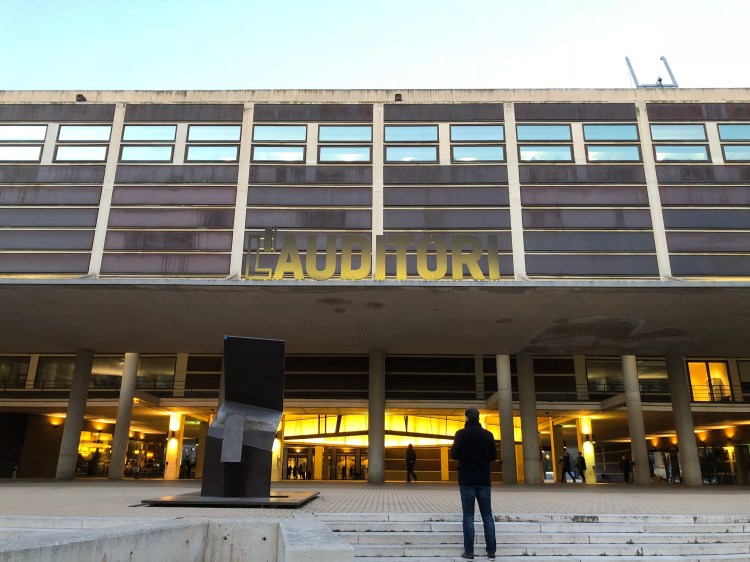
Im L´Auditori von Barcelona erklangen vom BZM – Vokalwerke italienischer und eines deutschen Barock-Komponisten!


Im L´Auditori von Barcelona erklangen vom BZM – Vokalwerke italienischer und eines deutschen Barock-Komponisten!

                                                                          L´Auditori Barcelona

Am Sonntag, 25. Februar 2018 fand wieder ein bewegendes Vokal-Konzert vom BZM – (BACH ZUM MITSINGEN) im kleinen Saal vom L´Auditori in Barcelona statt. Von gut 600 Sitzplätzen waren ca. 400 Besucher anwesend und genossen das reichhaltige Vokal-Programm.

                                                                L´Auditori Barcelona Saal 2

Als ein Hauptakteur fungierte der weltbekannte Counter-Tenor „Carlos Mena“ in dem Vokal-Programm.  Er brillierte in dem Bach-Werk BWV 1083 „Tilge, Höchster, meine Sünden“ in den Sätzen: 1083.1; 1083.9; 1083.12 und 1083.14.  Das BWV 1083, ist ein Arrangement von Johann Sebastian Bach von Giovanni Battista Pergolesi „Stabat Mater“ von 1736.  J.S. Bach verwendete eine deutsche Paraphrase des Psalms 51 als Text für seine Komposition.

In weiteren Werken von Giovanni Battista Pergolesi („Salve Regina“ und „O sacrum convivium“) und von Antonio Caldara in dem Vokalwerk: „In Lagrime Stemprato“ war Carlos Mena ein großartiger Interpret ausgestattet mit einem fantastisches Timbre und ein ausdrucksvolles Stimmvolumen überzeugte er die Besucher mit seiner großartigen Stimme. Das kleine BZM Instrumental-Ensemble begleitete ihn gekonnt durch sein Programm.

                                                                      Carlos Mena (Countertenor)

Eine Höhepunkt nach der Pause war die Bach-Kantate  – BWV 170 Vergnügte Ruh, beliebte Seelenlust“. Eine Besetzung in dieser Solo-Kantate für Alt mit einem CounterTenor ist inzwischen allgemein üblich geworden. Innig und überzeugend sang Carlos Mena diese großartige Solo-Kantate. Ein stürmischer Applaus am Ende der Kantate überzeugte davon, dass die Anwesenden seinen Gesangs-Vortrag mehr als genossen haben.

Zum Ende der Veranstaltung gab das rührige BZM-Kammerchor-Ensemble Barcelona die Doppelchörige Motette von Johann Sebastian Bach –  BWV 225 „Singet dem Herrn ein neues Lied“ als eine Krönung des Konzertes zum Besten. Hier hat der Dirigent Pau Jorquera Feinarbeit geleistet und den BZM-Kammerchor auf ein gutes Gesangs-Niveau gebracht. Ein Video vom BWV 225 mit den Sätzen 1 und 2 füge ich meiner Rezension bei. Ein jeder kann sich einen Eindruck davon machen, dass es in Barcelona ebenfalls eine großartige Bach-Kultur gibt.

                                                   L´Auditori Barcelona – Schlussapplaus

Nie endend wollender Schluss-Applaus war der verdiente Lohn für ein gelungenes Konzert-Programm.  Das Ensemble dankte mit mehreren Zugaben und erfreute damit die Besucher. Beschwingt von der wunderbaren Vokalmusik traten wir in die kalte Nacht von Barcelona und begaben uns nach einer kleiner Stärkung auf den Heimweg.

Video:  J.S. Bach Motette: BWV 225 „Singet dem Herrn ein neues Lied“

Fehler
Dieses Video existiert nicht

Ausführende:
BZM (BACH ZUM MITSINGEN)

BZM Instrumental-Ensemble Barcelona
BZM-Kammerchor Barcelona

Leitung: Pau Jorquera  und Daniel Tarrida

Aufführungsort:
L´Auditori Barcelona am 25.3.2018


Language English

In L’Auditori of Barcelona the vocal works of Italian and German baroque composers were performed by the BZM.

On Sunday, 25th February 2018, a moving vocal concert by BZM – (BACH TO MITSINGEN) took place in the small auditorium of L’Auditori in Barcelona. From about 600 seats were about 400 visitors present and enjoyed the rich vocal program.

One of the main actors was the world-famous counter-tenor „Carlos Mena“ in the vocal program. He excelled in the Bach work BWV 1083 „Tilge, Highest, my sins“ in the sentences: 1083.1; 1083.9; 1083.12 and 1083.14. The BWV 1083, is an arrangement of Johann Sebastian Bach by Giovanni Battista Pergolesi „Stabat Mater“ of 1736. J.S. Bach used a German paraphrase of Psalm 51 as the text for his composition.

In other works by Giovanni Battista Pergolesi („Salve Regina“ and „O sacrum convivium“) and Antonio Caldara in the vocal work „In Lagrime Stemprato“ Carlos Mena was a great performer with a fantastic timbre and an expressive vocal volume that convinced him vocalist with his great voice. The small BZM instrumental ensemble skilfully accompanied him through his program.

A highlight after the break was the Bach Cantata – BWV 170 „Vergnügte Ruh, beliebte Seelenlust“ („Happily Resting, popular lust for the soul.“) An instrumentation in this solo cantata for Alt with a CounterTenor has become commonplace, and Carlos Mena sang this great solo cantata intimately and convincingly. A stormy applause at the end of the cantata convinced that the attendees more than enjoyed his singing talk.

At the end of the event, the little BZM Chamber Choir Barcelona performed Johann Sebastian Bach’s Double Choir Motet – BWV 225 „Singet dem Herrn ein neues Lied“ („Sing to the Lord a New Song“) as a crowning achievement. Here, the conductor Pau Jorquera has done a fine job and brought the BZM chamber choir to a good vocal level. A video from the BWV 225 with the sentences 1 and 2, I attach to my review. Everyone can get an idea of ​​Barcelona’s great Bach culture as well.

Never ending final applause was the deserved reward for a successful concert program. The ensemble thanked with several encores and delighted the visitors. Elated, from the wonderful vocal music we entered the cold night of Barcelona and went for a little refreshment on the way home.

Video: J.S. Bach Motet: BWV 225 „Singet dem Herrn ein neues Lied“ („Sing to the Lord a new song“)

Fehler
Dieses Video existiert nicht

Performed by:
BZM (BACH ZUM MITSINGEN)

BZM Instrumental-Ensemble Barcelona
BZM-Kammerchor Barcelona

Conduction: Pau Jorquera  und Daniel Tarrida

Venue:
L´Auditori Barcelona on 25.3.2018

—————————————–

 Herzliche Grüße, greetings

Volker Hege

————————

Johann Christoph Friedrich Bach (1732-1795) Bückeburger Bach – „MISERE MEI DEUS“ – Psalm 50 (51) Für Soli Chor und Streicher!


Johann Christoph Friedrich Bach (1732-1795) Bückeburger Bach – „MISERE MEI DEUS“ – Psalm 50 (51) Für Soli Chor und Streicher!


Fehler
Dieses Video existiert nicht

Johann Christoph Friedrich Bach (* 21. Juni 1732 in Leipzig; † 26. Januar 1795 in Bückeburg) war ein deutscher Musiker und Komponist aus der Familie Bach und dritter der vier komponierenden Bachsöhne. Zur Kennzeichnung wird er häufig „der Bückeburger Bach“ genannt.

Johann Christoph Friedrich Bachs Lebenslauf begann wie der seiner Brüder: Er erhielt eine Ausbildung an der Leipziger Thomasschule sowie musikalischen Unterricht durch seinen Vater. Wilhelm Friedemann Bach, (1710-1784) der älteste Sohn von Johann Sebastian Bach, (1685-1750) hielt (nach der Aussage von Nikolaus Forkel (1749-1819) den Halbbruder für den „stärksten Spieler“ unter den vier Brüdern, der „seines Vaters Claviercompositionen am fertigsten vorgetragen“ habe.

Mit siebzehn Jahren begann Friedrich ein Jurastudium an der Leipziger Universität, brach dieses aber bald darauf, noch vor dem Tod des Vaters, wieder ab und folgte um die Jahreswende 1749/50 als gerade Achtzehnjähriger dem Ruf, als „Hochgräflich Schaumburg-Lippischer Cammer-Musicus“ am Hof in Bückeburg in Dienste zu treten. Wilhelm Graf zu Schaumburg-Lippe, der 1748 seinem Vater als Regent des kleinen Territoriums gefolgt war, hatte sich von der königlichen Hofmusik am Hofe Friedrichs II. in Potsdam stark beeindruckt gezeigt und feste Pläne gefasst, in seiner Residenz diesem Vorbild nachzueifern.

Am Bückeburger Hof waren derzeit die beiden Italiener Giovanni Battista Serini als Leiter der Hofkapelle und Angelo Colonna als Hofkomponist tätig.Bach lernte durch sie den Stil der italienischen Oper und Kantate kennen, da in den mindestens zweimal wöchentlich stattfindenden „Concerten“, die in der Regel spätnachmittags gegeben wurden, vor allem Vokalmusik aufgeführt wurde. Dazu unterhielt die Hofkapelle eine Sängerin, Lucia Elisabeth Münchhausen, Tochter des Hofmusikers Ludolf Andreas Münchhausen, die durch den Unterricht des Konzertmeisters Serini in die italienische Gesangskultur eingeführt wurde.

Bach erhielt zu Beginn des Jahres 1750 die Stelle eines Hofmusikers in Bückeburg, wo er sich wohl den Stil der am Hof gespielten Musik aneignen konnte. Datierte Kompositionen dieser Zeit aus seiner Hand sind bisher nicht überliefert.

Am 8. Januar 1755 heiratete Bach die Hofsängerin Münchhausen, die beiden Italiener verließen 1756 mit Beginn des Siebenjährigen Krieges den Hof, und Bach übernahm nun deren Aufgaben. Neben der Leitung der Konzerte hatte er für die Anschaffung und Komposition neuer Musik zu sorgen. Auf Betreiben des Grafen nahm er dazu auch Kontakt mit Musikern anderer Adelshöfe auf, um Notenmaterial zu erbitten – Graf Wilhelm hatte den Ehrgeiz, in seiner Musikbibliothek den neuesten Entwicklungen des Musikgeschmacks zu folgen.

1759 wurde Wilhelm Friedrich Ernst Bach, (1759-1845) der älteste Sohn von insgesamt acht Kindern des Paares, geboren, dessen Patenschaft der Graf auf Bachs Bitte hin übernahm. Wilhelm Friedrich Ernst Bach, (1759-1845) war der letzte Musiker in der direkten Nachkommenschaft von  Johann Sebastian Bach. Als 1767 Georg Philipp Telemann (1681-1767) in Hamburg starb, unternahm Johann Christoph Friedrich Bach seinen einzigen belegten Versuch, seine Stellung in Bückeburg gegen eine bessere zu tauschen, und bewarb sich als Musikdirektor in Hamburg; bei der Vergabe der Stelle wurde ihm jedoch sein älterer und bekannterer Halbbruder Carl Philipp Emanuel Bach (1714-1788) vorgezogen.

Dies führte aber nicht zu einer Trübung der brüderlichen Beziehungen, sondern es entwickelte sich ein eher verstärkter Kontakt und Austausch von Anregungen und Kompositionen.Von Oktober 1757 bis April 1758, in der Zeit des Siebenjährigen Kriegs, hatte sich der Graf mit einigen Mitgliedern des Hofes, darunter Bach, auf seinen Sitz in Nienstedten an der Elbe zurückgezogen. In dieser Zeit bewarb sich Bach erfolgreich als Organist an der evangelischen Hauptkirche in Altona. Graf Wilhelm erlaubte ihm jedoch nicht, diese Stelle anzutreten, ernannte ihn aber am 18. Februar 1759 offiziell zum Konzertmeister.

Für Johann Christoph Friedrich Bach begann nun eine intensive Schaffensphase. Neben vielen Kammermusikwerken und Klaviermusik komponierte er um 1769 seine ersten Oratorien Die Pilgrime auf Golgatha (Text: Justus Friedrich Wilhelm Zachariae) und Der Tod Jesu in der zweiten Textfassung von Karl Wilhelm Ramler (1760), dessen Erstfassung schon Carl Heinrich Graun (1704-1759) ( im Jahr 1755) und Telemann (1756) erfolgreich vertont hatten. Ebenfalls aus der Zeit vor 1770 stammen die ersten zehn seiner insgesamt zwanzig Sinfonien; zehn weitere entstanden in einer späteren Phase zwischen 1792 und 1794.

Am 26. Januar 1795 starb Johann Christoph Friedrich Bach „an einem hefftigen Brust-Fieber“ in Bückeburg, wo er am 31. Januar auf dem Jetenburger Friedhof in Bückeburg begraben wurde. Dort wurde 1803 auch Bachs Witwe beigesetzt. Sein Sohn Wilhelm Friedrich Ernst Bach führte die Komponistentradition in der Familie fort.

Johann Christoph Friedrich Bach schrieb Oratorien und Opern, insgesamt zwanzig Sinfonien (davon 12 verschollen), acht Klavierkonzerte, daneben Kammermusik und geistliche Lieder.

Die Rezeption seines musikalischen Werks erreichte bisher nicht die Bedeutung der seiner Brüder. Dieser Eindruck mag mit der unvollkommenen Überlieferung und unklaren Quellenlage seiner Kompositionen zusammenhängen.

Ausführende:

Sopran: Ibolya Verebics
Alt: Christel Borchers
Tenor: Uwe Hellmann
Bass: Daniel Lichtli

Gächinger Kantorei Stuttgart
Bach-Collegium Stuttgart

Leitung: Helmuth Rilling
Aufnahme von 1988
—————————–

Language: English

Johann Christoph Friedrich Bach (1732-1795) Bückeburg Bach – „MISERE MEI DEUS“ Psalm 50 (51) For soli choir and strings!

Fehler
Dieses Video existiert nicht

Johann Christoph Friedrich Bach (born June 21, 1732 in Leipzig, † January 26, 1795 in Bückeburg) was a German musician and composer from the Bach family and third of the four composing Bach sons. For labeling it is often called „the Bückeburger brook“.

Johann Christoph Friedrich Bach’s CV began like that of his brothers: He received training at the Leipzig Thomas School and musical instruction by his father. Wilhelm Friedemann Bach, (1710-1784), the eldest son of Johann Sebastian Bach, (1685-1750) – (according to the statement of Nikolaus Forkel 1749-1819) half brother for the „strongest player“ among the four brothers, who had „finished his father’s pianoforte compositions the most finished“.

At the age of seventeen, Frederick began studying law at the University of Leipzig, but broke it soon afterwards, even before the death of his father, and at the turn of the year 1749/50, at the age of eighteen, he was called „Hochgräflich Schaumburg-Lippischer Cammer-Musicus „To enter the court in Bückeburg. Wilhelm Graf zu Schaumburg-Lippe, who had succeeded his father as regent of the small territory in 1748, had been greatly impressed by the royal court music at the court of Frederick II in Potsdam and had made firm plans to emulate his model in his residence.

At the Bückeburger Hof, the two Italians Giovanni Battista Serini were currently the court composers and Angelo Colonna was the court composer. Through her, she became acquainted with the style of Italian opera and cantata, as a rule in the „Concerts“ held at least twice a week especially in the late afternoon, especially vocal music was performed. For this purpose, the court band entertained a singer, Lucia Elisabeth Münchhausen, daughter of the court musician Ludolf Andreas Münchhausen, which was introduced to the Italian vocal culture by the lessons of the concertmaster Serini.

At the beginning of the year 1750 Bach received the post of court musician in Bückeburg, where he was able to acquire the style of music played at the court. Dated compositions of this time from his hand are not yet known.

On January 8, 1755 Bach married the court singer Münchhausen, the two Italians left the court in 1756 with the beginning of the Seven Years‘ War, and Bach now took over their duties. In addition to directing the concerts, he had to provide for the acquisition and composition of new music. At the behest of the count, he also made contact with musicians from other aristocratic courtyards to solicit music – Graf Wilhelm had the ambition to follow in his music library the latest developments in musical taste.

Wilhelm Friedrich Ernst Bach, (1759-1845), the eldest son of a total of eight children of the couple, was born in 1759, whose sponsorship the count took over at Bach’s request. Wilhelm Friedrich Ernst Bach, (1759-1845), was the last musician in the direct descendants of Johann Sebastian Bach. When Georg Philipp Telemann (1681-1767)  died in Hamburg in 1767, Johann Christoph Friedrich Bach undertook his only proven attempt to change his position in Bückeburg for a better one, and applied as Music Director in Hamburg; in the award of the job, however, his older and better-known half-brother Carl Philipp Emanuel Bach (1714-1788) was preferred to him.

However, this did not lead to a clouding of fraternal relations, but instead a more intensive contact and exchange of ideas and compositions developed. From October 1757 to April 1758, during the Seven Years‘ War, the count had with some members of the court, including Bach, retired to his seat in Nienstedten on the Elbe. During this time, Bach successfully applied as an organist at the Protestant church in Altona. Count Wilhelm did not allow him to take this position, but appointed him on 18 February 1759 officially concertmaster.

For Johann Christoph Friedrich Bach now began an intensive creative phase. In addition to many chamber music works and piano music he composed around 1769 his first oratorios The Pilgrim on Golgotha ​​(text: Justus Friedrich Wilhelm Zachariae) and The Death of Jesus in the second text version of Karl Wilhelm Ramler (1760), whose first version was already Carl Heinrich Graun (1704-1759) ( in the year 1755)  and Telemann (1756) had successfully set to music. Also from the time before 1770 are the first ten of his twenty symphonies; ten others were created in a later phase between 1792 and 1794.

On January 26, 1795, Johann Christoph Friedrich Bach died of „a sickening chest fever“ in Bückeburg, where he was buried on January 31 at the Jetenburger cemetery in Bückeburg. There Bach’s widow was buried in 1803. His son Wilhelm Friedrich Ernst Bach continued the composer tradition in the family.

Johann Christoph Friedrich Bach wrote oratorios and operas, a total of twenty symphonies (12 of them lost), eight piano concertos, chamber music and sacred songs.

The reception of his musical work has not yet reached the significance of his brothers. This impression may be connected with the imperfect tradition and unclear sources of his compositions.

Performed by:

Soprano: Ibolya Verebics
Old: Christel Borchers
Tenor: Uwe Hellmann
Bass: Daniel Lichtli

Gächinger Kantorei Stuttgart
Bach Collegium Stuttgart

Conductor: Helmuth Rilling
Recording from 1988
———————————————

J.S. Bach – Kantate BWV 150 „Nach dir, Herr, verlanget mich „


J.S. Bach – Kantate BWV 150 „Nach dir, Herr, verlanget mich „

Fehler
Dieses Video existiert nicht


„Nach dir, Herr, verlanget mich“ (BWV 150) ist eine der frühesten Kirchenkantaten von Johann Sebastian Bach.

Bei dieser Kantate handelt es sich um eine der ältesten erhaltenen Kantaten Bachs (gemeinsam mit den Kantaten BWV 131, 196, 106 und 4); sie ist wahrscheinlich um 1706 entstanden. Christoph Wolff spricht in seiner Bach-Biographie von der „vermutlich frühesten erhaltenen Kantate“. Es liegt kein Autograph, sondern nur eine Abschrift aus dem Jahre 1753 vor, die Bachs Schüler Christian Friedrich Penzel angefertigt hat. Als Entstehungsort wird Arnstadt vermutet.

Der Text wurde von einem unbekannten Dichter auf der Grundlage von Psalm 25 verfasst.

Der Text besteht in den Chorsätzen Nach dir, Herr, verlanget mich; Leite mich in deiner Wahrheit und Meine Augen sehen stets zu dem Herrn aus den Worten des Psalms 25 (Verse 1–2 LUT; Vers 5 LUT und Vers 15 LUT). Für die Arien und den Schlusschor verwendete Bach eine Psalmparaphrase des unbekannten Librettisten.

Da jede textliche Beziehung auf das Kirchenjahr fehlt, wurden verschiedene liturgische Einordnungen vorgeschlagen. So könnte die Kantate für einen Beichtgottesdienst, für den 3. Sonntag nach Trinitatis oder für eine Bestattungsfeier komponiert worden sein.

Gesangsolisten: Sopran, Alt, Tenor, Bass (Alt, Tenor und Bass im Terzetto Nr. 5 können auch durch die Chorstimmen gesungen werden)
Chor: Sopran, Alt, Tenor, Bass
Orchester: Fagott, Violine I/II, Basso continuo.

Die Kantate besteht aus sieben Sätzen:

  1. Sinfonia: Instrumentalstück (Fagott, Violine I, Violine II, Basso continuo), Tonart h-moll, das Fagott ist als obligate Solostimme notiert, spielt jedoch den Basso continuo mit.
  2. Chor (Sopran, Alt, Tenor, Bass): Nach dir, Herr, verlanget mich, Beginn in h-moll, Schluss in H-Dur; Fagott, Violine I, Violine II, Basso continuo, das Fagott tritt solistisch gegenüber dem Basso continuo hervor.

  3. Arie (Sopran): Doch bin und bleibe ich vergnügt, h-moll, Violinen unisono und Basso continuo.

  4. Chor: Leite mich in deiner Wahrheit, h-moll; Fagott, Violine I, Violine II, Basso continuo, das Fagott folgt zwar melodisch dem Basso continuo, phrasiert und pausiert jedoch eigenständig.

  5. Terzetto (Alt, Tenor, Bass): Zedern müssen von den Winden, D-Dur, Fagott (solistisch) und Basso continuo. Der Vokalsatz ist einfach gehalten und kann auch von Chorsängern ausgeführt werden.

  6. Chor: Meine Augen sehen stets zu dem Herrn, Beginn D-Dur, Schluss H-Dur; Fagott (solistisch), Violine I, Violine II, Basso continuo. Madrigalartiger Chorsatz im 6/8-Takt

  7. Chor: Meine Tage in dem Leide, Beginn h-moll mit Schluss in H-Dur; Chaconne im 3/2-Takt.

Die frühe Kantate zeigt im Gesamtaufbau und in der Binnenstruktur der einzelnen Sätze bereits charakteristische Kompositionseigenheiten Bachs.

Die einleitende Sinfonia ist mit 19 Takten sehr kurz gehalten, am längsten sind die Chorstücke an zweiter und an letzter Stelle. Schon im ersten Satz wird als Vorgriff auf den darauffolgenden Chorsatz die musikrhetorische Klagefigur verwendet, ein chromatischer Quartgang abwärts, der in späteren Kantaten und Oratorien Bachs häufig auftritt.

In den folgenden Chorstücken dieser Kantate wechselt immer wieder die Geschwindigkeit. Im zweiten Teil steht der fugierte Anfang „Nach dir, Herr, verlanget mich“ in Allegro, darauf folgt „Mein Gott, ich hoffe auf dich“, homophon in Andante. Je nach der Textaussage in den Versen des vertonten Psalms 25 zieht sich diese Abfolge durch den gesamten Chorsatz. „Laß mich nicht zu Schanden werden“ wird „Un poco allegro“ fugiert und wechselt dann homophon zu Adagio. Die folgende Bitte „daß sich meine Feinde nicht freuen über mich“ ist wiederum mit „Allegro“ bezeichnet und fugiert. Den Schluss bildet eine homophone Kadenz auf die Durparallele, nun wieder im Adagio.

Die darauffolgenden Arie des Soprans Doch bin und bleibe ich vergnügt folgt nicht der seinerzeit üblichen Form der da-capo-Arie. Sie enthält keine Wiederholung, sondern ist liedartig durchkomponiert. Die melodische Struktur wird geprägt von der Corta-Figur, einer Abfolge dreier Noten, bei denen eine doppelt so lang wie die beiden anderen ist. Diese Figur wurde von Albert Schweitzer als „Freudenmotiv“ bezeichnet.

Im vierten Teil, einem Chorstück, wird die Eingangsbitte „Leite mich“ durch das Motiv einer zwei Oktaven umfassenden Tonleiter dargestellt. Auch hier finden sich wieder, je nach Textaussage, Wechsel zwischen den Tempobezeichnungen: Andante – Allegro – Andante.

Der fünfte Satz Cedern müssen von den Winden, ein Terzett von Alt, Tenor und Bass, reflektiert textlich die vorangehenden Psalmverse und veranschaulicht musikrhetorisch sowohl das Rauschen des Windes in den Zederbäumen als auch das „Widerbellen“ der Feinde, das der Psalmsänger zu gewärtigen hat. Der Basso continuo läuft hierbei weitgehend in Sechzehntelfiguren, die nur an Übergangsstellen durch Achtel und zweimal durch punktierte Achtel unterbrochen werden. Die Instrumente bilden so das Rauschen des Windes ab, während das „Widerbellen“ der Feinde in den Gesangsstimmen durch aufgeregte Überbindungen von Vierteln an kürzere Noten und Chromatik symbolisiert wird.

Bemerkenswert ist am sechsten Satz Meine Augen sehen stets zu dem Herrn zunächst die Form, denn er folgt dem Schema Präludium und Fuge. Nachdem alle vorherigen Teile einen 4/4-Takt-Takt aufweisen, steht dieser Satz im 6/8-Takt. Der erste Teil, der dem Präludium entsprechen würde, zeigt eine madrigalartige Struktur, wie dies auch bei manchen von Bachs Präludien für Orgel der Fall ist. Der Beginn der Fuge ist wiederum durch einen Tempowechsel zu Allegro gekennzeichnet.

Der Schlusschor Meine Tage in dem Leide ist in Form einer Chaconne geschrieben, das viertaktige Basso-continuo-Thema, das sich stets wiederholt, griff Johannes Brahms in seiner Vierten Symphonie auf.

Ausführende:

Condictor: Philippe Pierlot
Orchester: Ricercar Consort
Sopran: Katharine Fuge; Counter-Tenor: Carlos Mena; Tenor: Jan Kobow; Bass: Stephan MacLeod

Aufnahme von September 2004

———————————————–

J.S. Bach – Cantata BWV 150 „Nach dir, Herr, verlanget mich“ („After you, Lord, call me“)

„Nach dir, Herr, verlanget mich“ („After you, Lord, call me“) (BWV 150) is one of the earliest church cantatas by Johann Sebastian Bach.

Fehler
Dieses Video existiert nicht

This cantata is one of Bach’s oldest cantatas (together with the cantatas BWV 131, 196, 106 and 4); it probably originated around 1706. Christoph Wolff speaks in his Bach biography of the „presumably earliest surviving cantata“. There is no autograph, but only a copy from the year 1753 made by Bach’s pupil Christian Friedrich Penzel. As a place of origin Arnstadt is suspected.

The text was written by an unknown poet based on Psalm 25.

The text consists in the choral movements. After you, Lord, demand me; Lead me in your truth and My eyes always look to the Lord from the words of Psalm 25 (verses 1-2 LUT, verse 5 LUT and verse 15 LUT). Bach used a psalm paraphrase by the unknown librettist for the arias and the final chorus.

Since there is no textual relationship to the church year, various liturgical classifications have been proposed. Thus, the cantata could have been composed for a confessional service, for the third Sunday after Trinitatis or for a funeral.

Vocal soloists: soprano, alto, tenor, bass (alto, tenor and bass in Terzetto No. 5 can also be sung through the choir voices)
Choir: soprano, alto, tenor, bass
Orchestra: Bassoon, Violin I / II, Basso continuo.

The cantata consists of seven movements:

  1. Sinfonia: instrumental piece (bassoon, violin I, violin II, basso continuo), key in B minor, the bassoon is recorded as an obligatory solo part, but plays along with the basso continuo.

2nd Choir (soprano, alto, tenor, bass): After you, Lord, call me, beginning in B minor, ending in B major; Bassoon, Violin I, Violin II, Basso continuo, the bassoon solos as opposed to the basso continuo.

  1. Aria (soprano): But I am and remain cheerful, B minor, violins in unison and basso continuo.
  2. Chorus: Guide me in your Truth, b-minor; Bassoon, violin I, violin II, basso continuo, the bassoon melodically follows the basso continuo, but phrases and pauses independently.

  3. Terzetto (alto, tenor, bass): Cedars must by the winds, D major, bassoon (solo) and basso continuo. The vocal movement is simple and can also be performed by choir singers.

  4. Chorus: My eyes always look to the Lord, beginning in D major, ending in B major; Bassoon (Soloist), Violin I, Violin II, Basso continuo. Madrigal-like choral movement in 6/8 time

  5. Chorus: My Days in Suffering, beginning in B minor, ending in B major; Chaconne in 3/2-time.

The early cantata already shows characteristic compositional characteristics of Bach in the overall structure and in the internal structure of the individual movements.

The introductory sinfonia is very short with 19 bars, the longest are the choral pieces in second and last place. Already in the first movement, the musical rhetorical action figure is used in anticipation of the ensuing choral movement, a chromatic fourth movement downwards, which frequently occurs in Bach’s later cantatas and oratorios.

In the following choral pieces of this cantata the speed changes again and again. In the second part is the fugal beginning „After you, Lord, demands me“ in Allegro, followed by „My God, I hope for you“, homophonic in Andante. According to the textual statement in the verses of the psalm 25, this sequence runs through the entire choral movement. „Let me not be ashamed“ is „Un poco allegro“ fugiert and then changes homophone to Adagio. The following request „that my enemies do not rejoice over me“ is again called „Allegro“ and fugiert. The conclusion is a homophonic cadence on the Durparallele, now again in the Adagio.

The following aria of the soprano But I am and remain amused does not follow the then usual form of the da capo aria. It contains no repetition, but is composed by song. The melodic structure is dominated by the Corta figure, a sequence of three notes, one of which is twice as long as the other two. This figure was described by Albert Schweitzer as a „joy motif“.

In the fourth part, a choral piece, the introductory part „Guide me“ is represented by the motif of a two-octave scale. Again, there are, depending on the text statement, change between the tempo markings: Andante – Allegro – Andante.

The fifth movement, Cedar, by the Winds, a trio of alto, tenor, and bass, lyrically reflects the preceding psalmic verse, and illustrates, in the rhetoric of music, both the rustling of the wind in the cedar trees and the „barking“ of the enemies the psalmist has to face. The basso continuo runs here largely in sixteenth-notes, which are interrupted only at crossing points by eighths and two times by dotted eighths. The instruments thus mimic the sound of the wind, while the „barking“ of the enemies in the vocals is symbolized by excited transitions of neighborhoods to shorter notes and chromaticism.

Noteworthy is the sixth sentence My eyes always see the form of the Lord, for he follows the pattern of prelude and fugue. After all previous parts have a 4/4 time clock, this rate is in 6/8 time. The first part, which would correspond to the prelude, shows a madrigal-like structure, as is also the case with many of Bach’s preludes for organ. The beginning of the fugue is again marked by a tempo change to Allegro.

The closing chorus My Days in Sorrow is written in the form of a chaconne; the four-bar basso continuo theme, which is always repeated, was attacked by Johannes Brahms in his Fourth Symphony.

Performed by:

Conductor: Philippe Pierlot
Orchestra: Ricercar Consort
Soprano: Katharine Fuge; Counter Tenor: Carlos Mena; Tenor: Jan Kobow; Bass: Stephan MacLeod

Recording from September 2004

——————————————

Francesco Tristano spielt Johann Sebastian Bach BWV 988 – „Goldberg-City-Variations“


Francesco Tristano spielt Johann Sebastian Bach BWV 988 – „Goldberg-City-Variations“

Fehler
Dieses Video existiert nicht


Francesco Tristano Schlimé (* 16. September 1981) ist ein luxemburgischer Pianist, Komponist und Produzent. Er tritt unter dem Namen Francesco Tristano auf.

J.S. Bach´s Goldbergvariationen bilden nicht nur einen Höhepunkt im instrumentalen Werk des Komponisten, sondern gehören zu den herausragenden Werken barocker Variationskunst überhaupt. In diesem Zyklus, bestehend aus einer Aria mit 30 „Veränderungen“, entwickelt Bach eine musikalische Architektur, die sowohl die Einzelsätze zueinander in ein sinnvolles Verhältnis bringt, als auch alle Spielarten kontrapunktischer Satzkunst in kunstvoller Vollendung aufblühen lässt.
Seitdem hat sich fast jeder große Pianist an diesem Werk versucht, von Glen Gould bis Alexandre Tharaud oder Igor Levit.

Die Einspielung des jungen Luxemburgers Francesco Tristano ist besonders ambitioniert. Er entwickelt zu dem klingenden Variationswerk eine Visualisierung, er begreift Bachs Musik als architektonische Utopie.
Die Idee zu diesem Projekt geht zurück auf den Komponisten und Architekten lannis Xenakis und seine Idee einer „Kosmischen Stadt“.

Francesco Tristano hat darauf aufbauend ein visuelles Design-Konzept entwickelt, das in Echtzeit direkt durch sein eigenes Spiel generiert wird. Hier wird die musikalische Struktur der Goldbergvariationen als Analogie zur Entwicklung von Stadt-Räumen gelesen. Der Flügel steht vor einer großen Projektionsfläche, auf der sich ein mehrdimensionales Spiel mit Räumen und Formen entwickelt – alles live gesteuert durch die Musik.

Aufnahme von den Bach Festtage am 3. September 2016 in Köthen (Sachsen-Anhalt, Germany)

Zusätzliche Informationen zum Bachfest am 3. September 2016 in Köthen:

Link: https://meinhardo.wordpress.com/tag/mdr-video-bachfest-2016-koethen/

——————————-

Francesco Tristano plays Johann Sebastian Bach (BWV 988) „Goldberg City Variations“

https://videopress.com/v/DveTNB2x

Francesco Tristano Schlimé (born September 16, 1981) is a Luxembourgian pianist, composer and producer. He performs under the name of Francesco Tristano.

J.S. Bach’s Goldberg Variations are not only a highlight of the composer’s instrumental oeuvre, they are also among the outstanding works of Baroque art of variation. In this cycle, consisting of an aria with 30 „changes“, Bach develops a musical architecture that brings together the individual sentences to each other in a meaningful relationship, as well as all varieties of contrapuntal sentence art flourish in artistic perfection.
Since then, almost every great pianist has tried this work, from Glen Gould to Alexandre Tharaud or Igor Levit.

The recording of the young Luxembourger Francesco Tristano is particularly ambitious. He develops a visualization for the sounding variation work, he understands Bach’s music as an architectural utopia.
The idea for this project goes back to the composer and architect lannis Xenakis and his idea of ​​a „Cosmic City“.

Based on this, Francesco Tristano has developed a visual design concept that is generated in real time directly through his own game. Here the musical structure of Goldberg Variations is read as an analogy to the development of urban spaces. The grand piano stands in front of a large projection screen on which a multi-dimensional play with spaces and forms evolves – all controlled live by the music.

Recording of the Bach Festival on September 3, 2016 in Köthen (Saxony-Anhalt, Germany)

Additional information about Bachfest 2016 in Köthen:

Link: https://meinhardo.wordpress.com/tag/mdr-video-bachfest-2016-koethen/

———————————

Ein Tag im Leben des Pianisten: „Francesco Tristano Schlimé“


Ein Tag im Leben des Pianisten: „Francesco Tristano Schlimé“

Fehler
Dieses Video existiert nicht


Francesco Tristano Schlimé (* 16. September 1981) ist ein luxemburgischer Pianist, Komponist und Produzent. Er tritt unter dem Namen Francesco Tristano auf.

Francesco Tristano begann im Alter von fünf Jahren Klavier zu spielen und gab mit dreizehn Jahren sein erstes Konzert mit eigenen Kompositionen. Er besuchte die Juilliard School in New York, wo er bei Bruce Brubaker und Jacob Lateiner Unterricht nahm und die Meisterklasse bei Rosalyn Tureck absolvierte. Spätere Studien führten ihn an die Konservatorien in Brüssel, Riga, Paris und Luxemburg sowie 2003 an der Musikhochschule Kataloniens in Barcelona.

Er debütierte im Jahr 2000 mit dem Russischen Nationalorchester unter Mikhail Pletnev, mit dem er Sergei Prokofjews Klavierkonzert Nr. 5 und Maurice Ravels Klavierkonzert in G-Dur einspielte. Später tourte er mit dem Französischen Nationalorchester Lille, dem Orchestre Philharmonique du Luxembourg und anderen.

2001 gründete er das Kammerensemble „The New Bach Players“, für das er Antonio Vivaldis Die vier Jahreszeiten für Klavier und Orchester transkribierte und selbst dirigierte. 2004 gewann er den Internationalen Pianistenpreis für zeitgenössische Musik im französischen Orléans. 2006 gründete er die Band „Aufgang“, deren erstes Album 2009 veröffentlicht wurde. 2014 schied Tristano bei „Aufgang“ aus. Seitdem konzentriert er sich bei Kollaborationen auf die Zusammenarbeit mit Bachar Khalifé (percussion & electronics) und Pascal Schumacher (vibes, marimba, Glock), mit denen er im Trio auftritt. Tristano war „Artist in Residence“ der Hamburger Symphoniker in der Saison 2010/2011.

Der Musiker hat zahlreiche Alben veröffentlicht, darunter Einspielungen von J.S. Bach – Goldberg-Variationen sowie des pianistischen Gesamtwerks von Luciano Berio. Auf seinem 2007 erschienenen Album Not for Piano präsentiert er mittels stilistischer Anleihen bei Klassik und Minimal Music eigene Versionen von Techno-Klassikern für Piano solo. Für sein Album Idiosynkrasia arbeitete er unter anderem mit Carl Craig.

Im Mai 2017 unterzeichnete er einen Vertrag mit der renommierten Firma Sony Music, für die er als erstes Projekt ein Album mit Chilly Gonzales realisieren wird.

Francesco Tristano ist verheiratet, Vater von drei Söhnen und lebt in Barcelona.

Aufnahme des WDR-Fernsehen (Deutschland) von 2012

A day in the life of the pianist: „Francesco Tristano Schlimé“

Francesco Tristano Schlimé (born September 16, 1981) is a Luxembourgian pianist, composer and producer. He performs under the name of Francesco Tristano.

Francesco Tristano began playing the piano at the age of five and, at the age of thirteen, gave his first concert with his own compositions. He attended the Juilliard School in New York, where he took classes with Bruce Brubaker and Jacob Lateiner and completed the master class with Rosalyn Tureck. Later studies took him to the conservatories in Brussels, Riga, Paris and Luxembourg and in 2003 at the Music Academy of Catalonia in Barcelona.

He made his debut in 2000 with the Russian National Orchestra under Mikhail Pletnev, with whom he recorded Sergei Prokofiev’s Piano Concerto No. 5 and Maurice Ravel’s Piano Concerto in G major. Later he toured with the French National Orchestra Lille, the Orchester Philharmonique du Luxembourg and others.

In 2001 he founded the chamber ensemble „The New Bach Players“, for which he transcribed and conducted Antonio Vivaldi’s The Four Seasons for Piano and Orchestra. In 2004 he won the International Pianist Prize for Contemporary Music in Orléans, France. In 2006 he founded the band „Aufgang“, whose first album was released in 2009. In 2014, Tristano retired at „rising“. Since then he concentrates on collaborations with Bachar Khalifé (percussion & electronics) and Pascal Schumacher (vibes, marimba, Glock), with whom he appears in the trio. Tristano was „Artist in Residence“ of the Hamburg Symphony Orchestra in the 2010/2011 season.

The musician has released numerous albums, including recordings of Bach’s Goldberg Variations and the pianistic complete works of Luciano Berio. On his 2007 album Not for Piano, he presents his own versions of techno classics for solo piano by means of stylistic borrowings in classical and minimal music. For his album Idiosynkrasia he worked among others with Carl Craig.

In May 2017, he signed a contract with the renowned company Sony Music, for which he will realize the first project an album with Chilly Gonzales.

Francesco Tristano is married, father of three sons and lives in Barcelona.

Recording of the WDR television (Germany) of 2012

Antonio Vivaldi (1678-1741) Cello-Konzerte!


Antonio Vivaldi (1678-1741) Cello-Konzerte!

Fehler
Dieses Video existiert nicht


Antonio Lucio Vivaldi (* 4. März 1678 in Venedig; † 28. Juli 1741 in Wien) war ein venezianischer Komponist und Violinist des Barocks.

Um 1730 setzte ein Wandel des Musikgeschmacks ein. Vivaldis Kompositionen sprachen das venezianische Publikum immer weniger an. Wahrscheinlich deshalb zog er 1740 nach Wien, um Unterstützung bei Kaiser Karl VI. zu suchen, der jedoch schon im Oktober 1740 starb. Der einstmals bekannteste Musiker Europas blieb in Wien unbeachtet von der Musikwelt.

Vivaldi starb zehn Monate nach seiner Ankunft in Wien und wurde am 28. Juli 1741 in einem einfachen Grab auf dem Spitaller Gottsacker vor dem Kärntnertor beigesetzt, an dessen Stelle sich heute das Hauptgebäude der Technischen Universität Wien (Karlsplatz) befindet. Dort ist eine Gedenktafel für ihn angebracht. 1972 wurde die Vivaldigasse in Wien-Favoriten nach ihm benannt.

Vivaldi war nicht nur in Norditalien sehr einflussreich, sondern auch im deutschen Raum. Johann Georg Pisendel verbreitete nach seiner Italienreise Vivaldis Techniken am Dresdner Hof. Johann Sebastian Bachs Stil machte unter dem Einfluss Vivaldis eine tiefgreifende Weiterentwicklung durch; unter anderem transkribierte Bach mehrere Konzerte für Cembalo und für Orgel.

Erst in jüngsten Jahren findet auch Vivaldis umfangreiches geistliches Werk wieder Beachtung. Häufig findet sich hier der gleiche schwungvolle, virtuose Stil und eine ähnliche Experimentierfreudigkeit wie in seinen Solokonzerten.
Vivaldis Musik geriet bald in Vergessenheit. Erst ab Beginn des 20. Jahrhunderts begann man sich vermehrt für Vivaldi zu interessieren.

Bereits Johann Gottfried Walther (1684-1748) oder Ernst Ludwig Gerber (1746-1819) unternahmen im 18. Jahrhundert den Versuch, Vivaldis Werke aufzulisten. Die erste einigermaßen systematische Werkaufzählung unternahm Mario Rinaldi (RN bzw. op.) 1943 bzw. 1945. 1948 publizierte Marc Pincherle (P, PS oder PV für Pincherle-Verzeichnis) ein Verzeichnis der Instrumentalwerke Vivaldis, welches sich aber durch die fortschreitende Forschung und das Auftauchen weiterer Werke bald als lückenhaft erwies. 1968 verfasste Antonio Fanna (F) ebenfalls eine Liste von Instrumentalwerken, wobei es sich hauptsächlich um 530 beim Verlag Ricordi erschienene Werke handelte. Der dänische Musikwissenschaftler Peter Ryom (* 1937) veröffentlichte 1973 (deutsch 1974) schließlich ein aktualisiertes Werkverzeichnis, das sogenannte Ryom-Verzeichnis (RV). Dieses hat sich gegenüber den anderen heute durchgesetzt. 2007 erschien eine erweiterte Fassung.

Bis in die Gegenwart tauchen jedoch immer wieder neue Werke auf, etwa 1973 eine Sammlung von zwölf teilweise autographen Sonaten in Manchester. Erwähnenswert sind auch mehrere Psalmenfunde in Dresden in den Jahren 1991, 2003 und 2005 durch Peter Ryom und Janice Stockigt.

Antonio Vivaldi – Cello-Werke:

1. in B minor RV 424 0:05 Min.
2. in G minor Rv 416 10:26 Min.
3. in A minor Rv 418 19:59 Min.
4. in F major Rv 412 30:35 Min.
5. in C minor Rv 401 37:57 Min.
6. in G major Rv 413 48:19 Min.

Christopher Hogwood, Conductor
Aufnahme von 1988
—————————————-
Antonio Vivaldi (1678-1741) Cello Concerts!

Antonio Lucio Vivaldi (born March 4, 1678 in Venice, † July 28, 1741 in Vienna) was a Venetian composer and violinist of the Baroque.

Around 1730 began a change in the taste of music. Vivaldi’s compositions appealed to the Venetian audience less and less. That’s probably why he moved to Vienna in 1740 for support with Emperor Karl VI. but he died in October 1740. The once most famous musician in Europe remained unnoticed in Vienna by the music world.

Vivaldi died ten months after his arrival in Vienna and was buried on July 28, 1741 in a simple grave on the Spitaller Gottsacker in front of the Kärntnertor, in its place today the main building of the Vienna University of Technology (Karlsplatz). There is a plaque attached to him. In 1972 Vivaldigasse was named after him in Vienna’s Favoriten.

Vivaldi was not only very influential in northern Italy, but also in the German area. Johann Georg Pisendel spread Vivaldi’s techniques at the Dresdner Hof after his trip to Italy. Johann Sebastian Bach’s style underwent a profound development under the influence of Vivaldi; Among other transcribed Bach several concerts for harpsichord and organ.

Only in recent years, Vivaldi’s extensive spiritual work again attracted attention. Often there is the same sweeping, virtuoso style and a similar experimentation as in his solo concerts.
Vivaldi’s music soon fell into oblivion. It was not until the beginning of the twentieth century that people became increasingly interested in Vivaldi.

Already Johann Gottfried Walther or Ernst Ludwig Gerber attempted to list Vivaldi’s works in the 18th century. The first reasonably systematic list of works was undertaken by Mario Rinaldi (RN and op.) In 1943 and 1945, respectively. In 1948, Marc Pincherle (P, PS or PV for Pincherle-Verzeichnis) published a list of Vivaldi’s instrumental works Emergence of other works soon proved to be incomplete. In 1968, Antonio Fanna (F) also wrote a list of instrumental works, which mainly concerned 530 works published by Ricordi. The Danish musicologist Peter Ryom (* 1937) published 1973 (German 1974) finally an updated catalog raisonné, the so-called Ryom directory (RV). This has prevailed over the others today. 2007 saw an expanded version.

Until the present, however, new works are appearing, about 1973 a collection of twelve partially autograph sonatas in Manchester. Noteworthy are also several psalm finds in Dresden in the years 1991, 2003 and 2005 by Peter Ryom and Janice Stockigt.

Antonio Vivaldi (1678-1741) – Cello works:

1st in B minor RV 424 0:05 min.
2nd in G minor Rv 416 10:26 min.
3rd in A minor Rv 418 19:59 min.
4. in F major Rv 412 30:35 min.
5th in C minor Rv 401 37:57 min.
6. in G major Rv 413 48:19 min.

Christopher Hogwood, Conductor
Recording from 1988
—————————–

Jan Dismas Zelenka (1679-1745) „Missa Omnium Sanctorum“


Jan Dismas Zelenka (1679-1745) „Missa Omnium Sanctorum“

Fehler
Dieses Video existiert nicht


Jan Dismas Zelenka – (Taufname Jan Lukáš Zelenka; * getauft 16. Oktober 1679 in Launiowitz, Böhmen; † 23. Dezember 1745 in Dresden) war ein böhmischer Barockkomponist.

 Jan Dismas Zelenka  (1679-1745)  – „Missa Omnium Sanctorum“

 Die „Missa Omnium Sanctorum“ von Zelenka gilt als Meisterwerk!

 Rasante Koloraturen und himmlische Melodien!“ Temperamentvolle Orchesterbehandlung, halsbrecherische Fugen für die Sänger: die Messvertonung „Missa omnium Sanctorum“ unterstreicht die herausragende Stellung des J.S. Bach-Zeitgenossens Jan Dismas Zelenka.

Der böhmische Komponist Jan Dismas Zelenka wird seit einigen Jahren wieder vermehrt aufgeführt – er steht für temperamentvolle Barockmusik, verbunden mit einer kühnen Harmonik und geradezu sprudelnden Melodien. Zelenka war Anfang des 18. Jahrhunderts über Jahrzehnte als Musiker am Dresdner Hof angestellt – obwohl er oft den Hofkapellmeister vertrat, wurde ihm der Posten nicht dauerhaft übertragen.Trotz dieser Enttäuschung schrieb der böhmische Komponist überragende Werke, sowohl für Anlässe des Hofes als auch für die Gottesdienste in der Hofkirche in Dresden.

Außerhalb der sächsischen Hauptstadt Dresden geriet er nach seinem Tod recht schnell in Vergessenheit. Johann Sebastian Bach erkannte allerdings zu Zelenkas Lebzeiten dessen außergewöhnliche Fähigkeiten und führte Werke von ihm auf, auch eine persönliche Begegnung zwischen den beiden gilt als gesichert. Die „Missa Omnium Sanctorum“ gilt als Zelenkas bestes sakrales Werk.

 1.  Kyrie eleison

2.  Christe eleison

3.  Kyrie eleison

4.  Gloria in excelsis Deo

5.  Qui tollis peccata mundi

6.  Quoniam tu solus Sanctus I

7.  Quoniam tu solus Sanctus II

8.   Cum sancto Spiritu I

9.   Cum sancto Spiritu II

10. Credo

11. Sanctus

12. Benedictus

13. Osanna

Ausführende:

Prager Barocksolisten

Ensemble Inégal

Gabriela Eibenová – Sopran

Kai Wessel – Altus

Jan Kobow – Tenor

Tomáš Král – Bass

Marián Krejčík – Bass

Dirigent: Adam Viktora

————————————————–

Jan Dismas Zelenka (christening Jan Lukáš Zelenka, baptized October 16, 1679 in Launiowitz, Bohemia, † December 23, 1745 in Dresden) was a Bohemian Baroque composer.

Jan Dismas Zelenka (1679-1745) „Missa Omnium Sanctorum“

The „Missa Omnium Sanctorum“ by Zelenka is considered a masterpiece!

Fast-paced coloraturas and heavenly melodies! „Spirited orchestral treatment, breakneck joints for the singers: the Mass setting“ Missa omnium Sanctorum „underlines the outstanding position of the J.S. Bach’s contemporary Zelenka.

The bohemian composer Jan Dismas Zelenka has been performing again for several years – he stands for spirited Baroque music, combined with a bold harmony and downright bubbly melodies. Zelenka was employed for decades as a musician at the Dresden Court – although he often represented the court Kapellmeister, the post was not permanently transferred to him. Despite this disappointment, the Bohemian composer wrote outstanding works, both for the Court and for the Services in the Hofkirche in Dresden.

Outside of the Saxon capital Dresden, he fell into oblivion after his death. Johann Sebastian Bach, however, recognized Zelenka’s lifetime of his extraordinary skills and listed works by him, a personal encounter between the two is considered secure. The „Missa Omnium Sanctorum“ is considered Zelenka’s best sacred work.

1. Kyrie eleison

2. Christe eleison

3. Kyrie eleison

4. Gloria in excelsis deodorant

5. Qui tollis peccata mundi

6. Quoniam tu solus Sanctus I

7. Quoniam tu solus Sanctus II

8. Cum sancto Spiritu I

9. Cum sancto Spiritu II

10. Credo

11. Sanctus

12. Benedictus

13. Osanna

Performed by:

Prague baroque soloists

Ensemble Inégal

Gabriela Eibenová – soprano

Kai Wessel – Altus

Jan Kobow – Tenor

Tomáš Král – Bass

Marián Krejčík – Bass

Conductor: Adam Viktora

——————————————–

J.S. Bach – Kantate BWV 18 „Gleichwie der Regen und Schnee vom Himmel fällt“ – Kantate am Sonntag Sexagesimae!


J.S. Bach – Kantate BWV 18 „Gleichwie der Regen und Schnee vom Himmel fällt“ – Kantate am Sonntag Sexagesimae.

Fehler
Dieses Video existiert nicht

„Gleichwie der Regen und Schnee vom Himmel fällt“ (BWV 18) ist eine Kirchenkantate von Johann Sebastian Bach. Er komponierte sie in Weimar für Sexagesimae, wahrscheinlich bereits 1713.

Bach arbeitete ab 1708 für den Weimarer Hof. Am 2. März 1714 wurde er zum Konzertmeister ernannt. In dieser Position hatte er unter anderem die Aufgabe, einmal im Monat eine Kirchenkantate zu komponieren, die in der Schloßkirche aufgeführt wurde. Bach schrieb diese Kantate für den Sonntag Sexagesimae, den vorletzten Sonntag vor der Passionszeit. Die vorgeschriebenen Lesungen waren 2 Kor 11,19 LUT – 2 / Kor 12,9 / LUT und Lk 8,4–15 LUT, das Gleichnis vom Sämann.

Bach vertonte einen Text von Erdmann Neumeister, den dieser für den Hof in Eisenach geschrieben und in Gotha 1711 in der Sammlung Geistliches Singen und Spielen veröffentlicht hatte. Georg Philipp Telemann hatte ihn bereits zuvor vertont. Der Text zitiert zunächst Jesaja (Jes 55,10–11 LUT), der die Wirkung von Gottes Wort durch einen Vergleich mit Regen und Schnee veranschaulicht, mit Bezug zum Evangelium. Im folgenden Satz fügt der Dichter eine Warnung vor den Gefahren, die Gottes Wort bedrohen, abschnittsweise Bitten aus der Litanei Martin Luther´s ein. Der Schlusschoral ist die achte Strophe von Lazarus Spenglers Kirchenlied „Durch Adams Fall ist ganz verderbt“ (1524).

Die Kantate ist ein frühes Werk Bachs. Alfred Dürr datiert sie auf spätestens den 24. Februar 1715, wahrscheinlicher ein oder zwei Jahre früher. Christoph Wolff stellt dagegen fest: „Die originalen Aufführungsstimmen haben sich erhalten und erlauben eine Datierung auf das Jahr 1713“. Bach führte die Kantate erneut in Leipzig 1724 auf, mit erweitertem Instrumentarium und in einer anderen Tonart. Das Werk wurde dann wahrscheinlich zusammen mit der neu komponierten Kantate „Leichtgesinnte Flattergeister“ aufgeführt.

Wie andere Kantaten aus der Weimarer Zeit ist das Werk für ein kleines Ensemble gesetzt, drei Solisten, Sopran, Tenor und Bass, vierstimmigen Chor, vier Violen und Basso continuo mit Violoncello und Fagott. In einer Leipziger Fassung von 1724 oktavieren zwei Blockflöten die beiden höchsten Viola-Stimmen. John Eliot Gardiner vergleicht ihren Einsatz mit dem eines Orgel-Vierfußregisters. Die Kantate beginnt in der Weimarer Fassung in g-Moll, in der Leipziger Fassung in a-Moll.

Die Kantate, die mit einer Sinfonia beginnt, enthält fünf Sätze.

1. Sinfonia
2. Recitativo (Bass): Gleichwie der Regen und Schnee vom Himmel fällt
3. Recitativo e chorale (Litanei) (Tenor, Bass, Chor): Mein Gott, hier wird mein Herze sein – Du wollest deinen Geist und Kraft
4. Aria (Sopran): Mein Seelenschatz ist Gottes Wort
5. Choral: Ich bitt, o Herr, aus Herzensgrund

Die Kantate beginnt mit einer Sinfonia in g-Moll, die fallenden Regen und Schnee durch fallende Phrasen veranschaulicht. Sie ist in Da capo-Form und erinnert sowohl an eine Chaconne als auch ein Concerto. Die vier Bratschen und das Continuo mit Fagott und Cello sorgen für ein ungewöhnliches Klangbild.

Das Zitat von Jesaja wird vom Bass, der Vox Christi (Stimme Christi), gesungen als Secco-Rezitativ. Es ist Bachs erste Verwendung eines Rezitativs in einer Kirchenkantate.

Der zentrale Satz ist in Bachs Kantaten einzigartig: Der Chor-Sopran unterbricht viermal das Rezitativ der männlichen Solisten durch eine Bitte, die vom Chor durch den Ruf „Erhör uns, lieber Herre Gott!“ verstärkt wird. Das Rezitativ ist Adagio bezeichnet und steht in Es-Dur, während die eingeschobene Litanei dramatisch erscheint, Allegro in c-Moll.

Die einzige Arie, in Es-Dur, wird von den vier Bratschen unisono begleitet. Die Kantate schließt mit einem schlichten vierstimmigen Satz von Spenglers Lied, dem ersten von Bachs zahlreichen Choralsätzen als Abschluss von Kirchenkantaten.

Ausführende:

Adele Stolte, Sopran; Peter Schreier, Tenor;
Theo Adam, Bass
Thomanerchor Leipzig, Gewandhausorchester Leipzig

Dirigent: Thomaskantor Erhard Mauersberger

Aufnahme von November 1967
————————–

J.S. Bach Cantata BWV 18 „Gleichwie der Regen und Schnee vom Himmel fällt“ („As rain and snow fall from the sky“) – Cantata on Sunday Sexagesimae.

„Gleichwie der Regen und Schnee vom Himmel fällt“ („Like the rain and snow falling from the sky“) (BWV 18) is a church cantata by Johann Sebastian Bach. He composed them in Weimar for Sexagesimae, probably as early as 1713.

Bach worked from 1708 for the Weimar court. On March 2, 1714, he was appointed concertmaster. In this position he had, among other things, the task of composing a church cantata once a month, which was performed in the castle church. Bach wrote this cantata for Sunday Sexagesimae, the penultimate Sunday before Passion time. The prescribed readings were 2 Cor 11,19 LUT – 2 Cor 12,9 LUT and Lk 8,4-15 LUT, the parable of the sower.

Bach set a text by Erdmann Neumeister, who had written this for the court in Eisenach and published in Gotha in 1711 in the collection of Spiritual Singing and Playing. Georg Philipp Telemann had set it to music before. The text first quotes Isaiah (Isaiah 55: 10-11 LUT), which illustrates the effect of God’s Word through comparison with rain and snow, with reference to the gospel. In the following sentence, the poet inserts a warning of the dangers that threaten the word of God into sections of requests from the litany of Martin Luther. The final chorale is the eighth stanza of Lazarus Spenglers hymn „Through Adam’s Fall is Very Corrupted“ (1524).

The cantata is an early work by Bach. Alfred Dürr dates it no later than February 24, 1715, more likely one or two years earlier. Christoph Wolff, on the other hand, states: „The original performance voices have been preserved and allow dating to the year 1713“. Bach again performed the cantata in Leipzig in 1724, with expanded instruments and in a different key. The work was then probably performed together with the newly composed cantata „Leichtgesinnte Flattergeister“.

Like other cantatas from the Weimar period, the work is set for a small ensemble, three soloists, soprano, tenor and bass, four-part choir, four violas and basso continuo with violoncello and bassoon. In a Leipzig version of 1724 two recorders octave the two highest viola parts. John Eliot Gardiner compares their commitment with that of an organ four-foot register. The cantata begins in the Weimar version in G minor, in the Leipzig version in A minor.

The cantata, which begins with a sinfonia, contains five movements.

1st symphony
2. Recitativo (bass): the same as rain and snow fall from the sky
3. Recitativo e chorale (litany) (tenor, bass, choir): My God, here will be my heart – you want your spirit and strength
4. Aria (soprano): My soul’s treasure is God’s word
5. Chorale: I ask, O Lord, for the sake of the heart

The cantata opens with a Sinfonia in G minor that illustrates falling rain and snow through falling phrases. It is in Da capo form and is reminiscent of both a chaconne and a concerto. The four violas and the continuo with bassoon and cello create an unusual sound.

The quote from Isaiah is sung by the bass, the Vox Christi (voice of Christ), as Secco recitative. It is Bach’s first use of a recitative in a church cantata.

The central movement is unique in Bach’s Cantatas: the choir soprano interrupts four times the recitative of the male soloists by a request, which is reinforced by the chorus by the cry „Listen, dear Lord God!“. The recitative is called Adagio and is in E flat major, while the inserted litany appears dramatic, Allegro in C minor.

The only aria, in E flat major, is accompanied by the four violas in unison. The cantata concludes with a simple four-part movement of Spengler’s Song, the first of Bach’s many choral settings to conclude church cantatas.

Performed by:

Adele Stolte, soprano; Peter Schreier, tenor;
Theo Adam, bass
Thomanerchor Leipzig, Gewandhaus Orchestra Leipzig

Conductor: Thomaskantor Erhard Mauersberger

Recording from November 1967
———————————–

Christoph Graupner (1683-1760) – Sopran-Solokantate: „Diese Zeit ist ein Spiel der Eitelkeit“ GW 1165/09


Christoph Graupner (1683-1760) – Sopran-Solokantate: „Diese Zeit ist ein Spiel der Eitelkeit“ GW 1165/09

Fehler
Dieses Video existiert nicht


Christoph Graupner (* 13. Januarjul./ 23. Januar 1683greg. in Kirchberg; † 10. Mai 1760 in Darmstadt) war ein deutscher Komponist und Cembalist.

Der Landgraf Ernst Ludwig von Hessen-Darmstadt hörte seine Werke und bot ihm 1709 einen Posten an seinem Hof an. Bereits 1711 stieg er zum Hofkapellmeister auf. In diesem Jahr heiratete er die Pfarrerstochter Elisabeth Eckardt. 1722 bewarb er sich auf Empfehlung G. Ph. Telemanns um die bereits durch diesen abgelehnte Stelle des Thomaskantors in Leipzig.

Auf Geheiß seines Herrn musste er die Berufung als Nachfolger von Johann Kuhnau ablehnen, allerdings unter Aufbesserung seines ohnehin bereits hohen Verdienstes. So konnte Johann Sebastian Bach die Stelle erhalten. Graupner blieb bis zu seinem Tod am Hof des Landgrafen. Im Laufe der Zeit holte er eine Reihe von Musikern nach Darmstadt, die er aus seiner Zeit als Leipziger Thomasschüler kannte: den Vizekapellmeister Gottfried Grünewald, seinen späteren Nachfolger Johann Samuel Endler sowie den Kammermusikus Michael Boehm.

Graupners umfangreiches, fast vollständig erhaltenes Werk befindet sich zum größten Teil in der Universitäts- und Landesbibliothek Darmstadt. Es ist in großen Teilen noch unveröffentlicht und harrt der Entdeckung durch Musiker und Musikwissenschaftler. Vielfach betrachteten die Landesherren die Werke ihrer Komponisten als ihr persönliches Eigentum und im schnellen Wandel der Modeströmungen wurden die Kompositionen vernichtet. Graupners Familie wehrte sich gegen dieses Vorgehen und strengte einen Prozess an, der erst fast 80 Jahre nach Graupners Tod zu Gunsten der Familie entschieden wurde. Diesem Umstand und der Auslagerung der Bestände während des Zweiten Weltkrieges ist die Erhaltung dieses umfangreichen Werkes zu verdanken.

—————————-

Christoph Graupner (1683-1760)

Kantatenkonzert Januar 2018 – Kirchheimer Konzertwinter

Christoph Graupner (1683-1760) galt noch bis vor einigen Jahren als fast vergessener Komponist. Er, dessen Name noch zu Lebzeiten in einem Atemzug mit J.S. Bach und Telemann genannt wurde, ist heute als bedeutender Barockkomponist vermehrt wieder ins Bewusstsein der Musikwelt gerückt. Im vergangenen Jahr beteiligte sich auch das Kirchheimer BachConsort mit der Aufführung von fünf Kantaten erfolgreich an dieser Pionierarbeit unter der Leitung der finnischen Graupner-Spezialistin Sirkka-Liisa Kaakinen-Pilch (Violine).

Doch gibt es noch viel zu tun, denn Graupner hat der Nachwelt mehr als 1400 Kantaten hinterlassen, über 95 % sind noch nicht einmal in Editionen erschlossen. Darum widmet sich der Kirchheimer Konzertwinter nach den begeistert aufgenommenen Konzerten der letzten Saison erneut dem überreichen Kantatenschatz Christoph Graupners, diesmal unter der kompetenten Leitung des Bach-Kenners Rudolf Lutz aus St.Gallen, der weitere aus der Darmstädter Bibliothek ausgesuchte und frisch edierte Kantaten einstudieren und aufführen wird.

Ihm zur Seite stehen das mit Alte-Musik-Spezialisten aus ganz Europa besetzte Kirchheimer BachConsort und hervorragende Solisten.

Das Motto der Konzerte lautet: Solo & Dialog. Zu Gehör kommt die nachstehende Kantate in farbiger instrumentaler Besetzung (Traversflöte, Oboen, Naturhörner, Fagott, Streicher, Cembalo und Orgel):

Christoph Graupner (1683-1760) – Sopran-Solokantate:
„Diese Zeit ist ein Spiel der Eitelkeit“ GW 1165/09

Ausführende:

Marie Luise Werneburg (Sopran)

Kirchheimer BachConsort

Leitung: Rudolf Lutz

Aufnahme aus der Protestantischen Kirche in Kirchheim an der Weinstraße – am 06. und 07. Januar 2018.

Christoph Graupner (1683-1760) – soprano solo cantatas:
„Diese Zeit ist ein Spiel der Eitelkeit“ („This time is a game of vanity“) GW 1165/09

Christoph Graupner (born January 13 / January 23, 1683greg in Kirchberg, † May 10, 1760 in Darmstadt) was a German composer and harpsichordist.

The landgrave Ernst Ludwig of Hesse-Darmstadt heard his works and offered him 1709 a post at his court. Already in 1711 he rose to the court Kapellmeister. This year he married the pastor’s daughter Elisabeth Eckardt. In 1722 he applied on the recommendation of Telemann for the already rejected by this position of the Thomaskantors in Leipzig.

At the behest of his master, he had to reject the appointment as successor to Johann Kuhnau, but with amelioration of his already high earnings. So Johann Sebastian Bach was able to get the job. Graupner remained at the court of the Landgrave until his death. Over time, he brought a number of musicians to Darmstadt, whom he knew from his time as a student in Leipzig: the vice-Kapellmeister Gottfried Grünewald, his future successor Johann Samuel Endler and the chamber musician Michael Boehm.

Graupner’s extensive, almost completely preserved work is for the most part in the University and Regional Library Darmstadt. It is largely unpublished and awaits discovery by musicians and musicologists. In many cases, the sovereigns considered the works of their composers as their personal property, and in the rapid change of fashion movements, the compositions were destroyed. Graupner’s family resisted this practice and initiated a trial that was decided on behalf of the family almost 80 years after Graupner’s death. This circumstance and the outsourcing of stocks during the Second World War is due to the preservation of this extensive work.

—————————-

Christoph Graupner (1683-1760)

Christoph Graupner (1683-1760) – soprano solo cantatas:
„Diese Zeit ist ein Spiel der Eitelkeit“ („This time is a game of vanity“) GW 1165/09

Cantata Concert January 2018 – Kirchheimer Konzertwinter

Until a few years ago, Christoph Graupner (1683-1760) was considered an almost forgotten composer. He, whose name was mentioned during his lifetime in the same breath as Bach and Telemann, has now increasingly returned to the consciousness of the music world as a significant Baroque composer. In the past year, the Kirchheim BachConsort also successfully participated in this pioneering work with the performance of five cantatas under the direction of the Finnish Graupner specialist Sirkka-Liisa Kaakinen-Pilch (violin).

But there is still much to do, because Graupner has left more than 1400 cantatas to posterity, over 95% are not even accessible in editions. For this reason, the Kirchheim Concert Winter after the enthusiastically recorded concerts of the last season again dedicated to the abundant cantatas of Christoph Graupner, this time under the competent leadership of Bach expert Rudolf Lutz from St.Gallen, who rehearsed more and selected from the Darmstadt library and edited cantatas will perform.

At his side are the Kirchheimer BachConsort, which is staffed by old music specialists from all over Europe, and outstanding soloists.

The motto of the concerts is: Solo & Dialog. The following cantata in color instrumental composition (flute, oboe, natural horns, bassoon, strings, harpsichord and organ) will be heard:

Christoph Graupner (1683-1760) – soprano solo cantatas:
„Diese Zeit ist ein Spiel der Eitelkeit“ („This time is a game of vanity“) GW 1165/09

Performed by:

Marie Luise Werneburg (soprano)
Kirchheim Bach Consort

Conductor: Rudolf Lutz

Admission from the Protestant Church in Kirchheim an der Weinstraße – on the 6th and 7th of January 2018
——————————-

Helmuth Rilling „Ein Leben mit J.S. Bach“


Helmuth Rilling „Ein Leben mit J.S. Bach“

Fehler
Dieses Video existiert nicht


Helmuth Rilling (* 29. Mai 1933 in Stuttgart) ist ein deutscher Kirchenmusiker, Dirigent und Musikpädagoge.

Rilling studierte zunächst an der Hochschule für Musik und Darstellende Kunst Stuttgart unter anderem bei Karl Ludwig Gerok, Hermann Keller und Hans Grischkat, dann ab 1955 Orgel bei Fernando Germani in Rom. Am 1. Dezember 1957 wurde er Kantor an der wiederaufgebauten Gedächtniskirche in Stuttgart-Nord und übernahm kurz darauf zusätzlich einen Lehrauftrag an der Kirchenmusikhochschule in Berlin. Seit 1963 Kirchenmusikdirektor in Stuttgart, wurde er 1969 Professor für Chorleitung an der Hochschule für Musik und Darstellende Kunst Frankfurt am Main. Diese Professur hatte er bis 1985 inne.

Ursprünglich Interpret vorbachscher Musik und romantischer und zeitgenössischer Chormusik, ist seit den 70er Jahren das geistliche und weltliche Werk von Johann Sebastian Bach Rillings Arbeitsschwerpunkt. So spielte er zwischen 1970 und 1985 als erster Dirigent alle geistlichen Kantaten Johann Sebastian Bachs auf Schallplatte ein. Friedrich Hänssler, der den Mut hatte, diese Produktion in seinem Verlag herauszugeben, erhielt dafür 1985 den Grand Prix du Disque.
Rilling gründete im Januar 1954 die Gächinger Kantorei und 1965 das Bach-Collegium Stuttgart, ferner 1970 das Oregon Bach Festival und 1981 die Internationale Bachakademie Stuttgart, deren künstlerischer Leiter er bis zu seinem Rücktritt im Februar 2012 war. Er war von 1985 bis 1996 Künstlerischer Leiter des Landesjugendchores Baden-Württemberg. Von 1969 bis 1982 leitete er zudem die Frankfurter Kantorei.

1985 konnte er die erste Gesamtaufnahme aller Bachkantaten abschließen, 2000 folgte dann die erste Gesamtaufnahme aller Werke von Johann Sebastian Bach unter Rillings künstlerischer Gesamtleitung auf 172 CDs.

Wikipedia:  https://en.wikipedia.org/wiki/Helmuth_Rilling        


Helmuth Rilling „A Life with J.S. Bach“

Helmuth Rilling (born May 29, 1933 in Stuttgart) is a German church musician, conductor and music educator.

Rilling initially studied at the University of Music and Performing Arts in Stuttgart, among others, Karl Ludwig Gerok, Hermann Keller and Hans Grischkat, then from 1955 organ with Fernando Germani in Rome. On December 1, 1957, he became cantor at the rebuilt Memorial Church in Stuttgart-North and took over shortly thereafter additionally a teaching assignment at the church music college in Berlin.

Since 1963 church music director in Stuttgart, he became professor of choral conducting at the Academy of Music and Performing Arts Frankfurt am Main in 1969. He held this professorship until 1985.

Originally an interpreter of Vorbachian music and romantic and contemporary choral music, since the 70s the spiritual and secular work of Johann Sebastian Bach Rilling has been the focus of his work. Between 1970 and 1985 he was the first conductor to record all sacred cantatas by Johann Sebastian Bach on vinyl. Friedrich Hänssler, who had the courage to publish this production in his publishing house, received in 1985 the Grand Prix du Disque.

Rilling founded the Gächinger Kantorei in January 1954 and the Bach Collegium Stuttgart in 1965, as well as the Oregon Bach Festival in 1970 and the Stuttgart International Bachakademie in 1981, whose artistic director he was until his resignation in February 2012. He was from 1985 to 1996 artistic director of the Landesjugendchores Baden-Württemberg. From 1969 to 1982 he also headed the Frankfurt Kantorei.

In 1985 he was able to complete the first complete recording of all Bach cantatas, followed in 2000 by the first complete recording of all works by Johann Sebastian Bach under Rilling’s artistic direction on 172 CDs.

Wikipedia:  https://en.wikipedia.org/wiki/Helmuth_Rilling        


Ein Zusatz-Video:

J.S.Bach. Cantata BWV 51, „Jauchzet Gott in allen Landen“
ist eine Solokantate für Sopran.

Weder der Textdichter noch das genaue Entstehungsjahr der Kantate sind bekannt. Komponiert wurde sie in Leipzig für den 15. Sonntag nach Trinitatis. Als wahrscheinliches Entstehungsjahr wird 1730 angenommen.

„Jauchzet Gott in allen Landen ist eine der bekanntesten Kantaten Bachs. Die Besetzung ist in seinem geistlichen Werk einmalig und verlangt sowohl der Solostimme als auch der Trompete sehr große Leistungen bezüglich Tonhöhe und Virtuosität ab. Man darf vermuten, dass der Trompetenpart der Uraufführung von dem für sein brillantes Spiel bekannten Leipziger Ratsmusiker Gottfried Reiche übernommen wurde. Die Sopranstimme gab der Bachforschung lange Zeit Rätsel auf, weil damals einerseits in Leipzig Frauen als Sängerinnen in Kirchen nicht zugelassen waren, andererseits die Solopartie solch hohe Anforderungen stellt, dass sie wohl kaum von einem Knabensopran heutigen Formats hätte ausgeführt werden können. Die Erklärung hierfür ist, dass zu Bachs Zeit der Stimmbruch bei Knaben üblicherweise erst mit 16 oder 17 Jahren einsetzte.

Von der Kantate existiert ebenfalls eine Fassung des Sohnes Wilhelm Friedemann Bach, der eine zweite Trompete und Pauken hinzufügte.

Ausführende:

Lenneke Ruiten, Soprano
Javier Simó, Trumpet
Anka Smeu, Violin,
Grigori Nedobora, Violin

Real Filharmonia de Galicia, Dirigent: Helmuth Rilling
Auditoruo de Galicia, Santiago de Compostela, Spain. 24.02.20211

—————————–

Additional video:

Video: J.S Bach. Cantata BWV 51, „Jauchzet Gott in allen Landen“ („Rejoice in all lands“)

is a solo cantata for soprano.
Neither the librettist nor the exact year of the cantata are known. She was composed in Leipzig for the 15th Sunday after Trinitatis. Probably the year of origin is assumed in 1730.

Even God in all lands is one of Bach’s most famous cantatas. The cast is unique in his sacred work and requires both the solo part and the trumpet to perform very well in terms of pitch and virtuosity. One may assume that the trumpet part of the premiere was taken over by the well-known Leipzig-based musician Gottfried Reiche. For a long time the soprano voice was a mystery to Bach research, because on the one hand in Leipzig women were not admitted as singers in churches, on the other hand the solo part placed such high demands that it could hardly have been performed by a boy soprano of today’s format. The explanation for this is that at Bach’s time the boy’s voice broke usually at the age of 16 or 17 years.

From the cantata there is also a version of the son Wilhelm Friedemann Bach, who added a second trumpet and timpani.

Performed by:

Lenneke Ruiten, Soprano
Javier Simó, Trumpet
Anka Smeu, violin,
Grigori Nedobora, Violin

Real Filharmonia de Galicia, Conductor: Helmuth Rilling
Auditorio de Galicia, Santiago de Compostela, Spain. 24.02.20211
———————

J.S. Bach – Kantate BWV 82 „Ich habe genug“ – zum Fest Mariä Reinigung!


J.S. Bach – Kantate BWV 82 „Ich habe genug“ – zum Fest Mariä Reinigung!

Fehler
Dieses Video existiert nicht

———————————

Johann Sebastian Bach (1685-1750)

Kantate BWV 82 „Ich habe genug“ (2. Februar 1727)

Fest Mariä Reinigung 

1. Ich habe genug (Arie: B)
2. Ich habe genug (Rezitativ: B) 07:25
3. Schlummert ein, ihr matte Augen (Arie: B) 08:26
4. Mein Gott! wann kömmt das schöne: Nun! (Rezitativ: B) 18:04
5. Ich freue mich auf meinen Tod (Arie: B) 18:47

Bass Solist: Peter Kooy

Aufgeführt von Philippe Herreweghe und dem Chor & Orchester von La Chapelle Royale.
Aufnahme von 1991.

—————————-

„Ich habe genug“ wurde für das Fest der Reinigung der Jungfrau Maria geschrieben (2. Februar – Mariä Lichtmess), das 1727 (das Jahr seiner Zusammensetzung) am vierten Sonntag nach dem Dreikönigsfest fiel.  Zu dieser Gelegenheit entstand die Kantate BWV 83 („Erfreute Zeit im neuen Bunde“) aus dem Jahr 1724, die zum ersten der fünf jährlichen Kantatenzyklen von Bach gehört und deren Libretto (anonym) fehlt zu einem biblischen Text.

Die frühe Version in c-Moll wurde später einigen Veränderungen unterworfen, ohne jedoch ihren Charakter als Solokantate zu verlieren. 1731 wurde es für Sopran in e-Moll transponiert, 1735 dann erneut für Mezzosopran mit Querflöte anstelle von Oboe revidiert und schließlich zwischen 1745 und 1748 wieder in seine ursprüngliche Form zurückversetzt mit einer Rückkehr zum Basssolisten Die Oboe wurde durch eine Oboe da Caccia ersetzt.

Das Rezitativ „Ich habe genug“ (Nr. 2) und die Arie „Schlummert ein“ (Nr. 3) im Notenbüchlein ab 1725 für Anna Magdalena Bach, aber diese Stücke wurden erst vor 1730 eingefügt, was beweist, dass die Version im Kantaten-Score wurde vor diesem Datum geschrieben. Die Kantate hat keinen Chor und besteht aus nicht mehr als drei Arien und zwei Rezitativen. Alle Arien verwenden identische instrumentale Kräfte (konzertierende Oboe, Streicher und Continuo), die in Bach einzigartig sind; die Rezitative sind „einfach“, aber mit Passagen im Arioso-Stil.

Die gesamte Partitur ist von einem persönlichen und intimen Ton (wieder in der ersten Person) durchdrungen, der eng mit dem Lied von Simeon verwandt ist und sich an Gott wendet, nachdem er das Jesuskind in seine Arme genommen hat: „Denn meine Augen haben dein Heil gesehen“ 2, 30) – uns wurde gesagt, dass Simeon durch den Heiligen Geist offenbart wurde, „dass er den Tod nicht sehen sollte, bevor er den Christus des Herrn gesehen hatte“ (Lk 2, 36). Von der ganzen Evangelienerzählung der Darstellung Christi im Tempel (Lukas 2, 22-32) hat der Dichter nur diesen Aspekt beibehalten, mit dem Ergebnis, dass die Kantate zu einer Betrachtung des Todes wird, die als die Befreiung von den Bedrängnissen dieser Welt und der Vereinigung der Seele mit ihrem Erretter.

Jede der drei Arien folgt einem bestimmten formalen Muster. Die erste (A B B ‚) ist eine Seite voller Traurigkeit, die oft mit der Arie „Erbarme dich, mein Gott“ aus der Matthäus-Passion verglichen wurde. Das zweite, ein Wiegenlied, das die Kantate berühmt gemacht hat, ist auch in der Stimmung mit dem großen Meisterwerk vergleichbar, das zur gleichen Zeit geschrieben ist; es hat die Form einer erweiterten Da Capo Arie (A-BAC-A). Die dritte Arie, tänzerisch im Charakter, ist eine freie Da-Capo-Form. “
——————
Johann Sebastian Bach (1685-1750)

Cantata BWV 82 „Ich habe genug“ (2 February 1727) or the Feast of the Purification of the Virgin Mary!

1. Ich habe genug (Aria: B)
2. Ich habe genug (Recitative: B) 07:25
3. Schlummert ein, ihr matten Augen (Aria: B) 08:26
4. Mein Gott! wann kömmt das schöne: Nun! (Recitative: B) 18:04
5. Ich freue mich auf meinen Tod (Aria: B) 18:47

Bass Soloist: Peter Kooy

Performed by Philippe Herreweghe and the Choir & Orchestra of La Chapelle Royale.
Recording: 1991.

„‚Ich habe genug‘ was written for the Feast of the Purification of the Virgin (2 February — Candlemas Day), which in 1727 (the year of its composition) fell upon the fourth Sunday after Epiphany. It has been established that another cantata was performed on this occasion, BWV 83 (Erfreute Zeit im neuen Bunde) written in 1724 and therefore belonging to the first of the five annual cycles of cantatas composed by Bach. The libretto of this new cantata (anonymous) is lacking in any reference to a biblical text.

The early version in C minor was later subjected to a number of changes without, however, losing its character as a solo cantata. It was transposed into E minor for soprano in 1731, then, in 1735, revised again for mezzo-soprano with a transverse flute instead of an oboe, and finally it regained its original shape between 1745 and 1748 with a return to the bass soloist while the oboe was replaced by an oboe da caccia.

The recitative ‚Ich habe genug‘ (No. 2) and the aria, ‚Schlummert ein‘ (No. 3) figure in the Notenbüchlein compiled for Anna Magdalena Bach from 1725 on, but these pieces were not inserted before 1730, which proves that the version in the cantata score was written before that date. The cantata has no chorus and consists of no more than three arias and two recitatives. All the arias employ identical instrumental forces (concertante oboe, strings and continuo), which is unique in Bach; the recitatives are ’simple‘, but with passages in arioso style.

The entire score is suffused with a personal and intimate tone (again in the first person), closely related to the Song of Simeon, addressing God after having taken the infant Jesus in his arms, ‚For mine eyes have seen thy salvation‘ (Luke 2, 30) — we are told that it had been revealed to Simeon by the Holy Ghost ‚that he should not see death, before he had seen the Lord’s Christ‘ (Luke 2, 36). Of the whole Gospel narrative of Christ’s presentation in the Temple (Luke 2, 22-32) the poet has retained only this aspect, with the result that the cantata becomes a contemplation of death considered as the liberation from the afflictions of this world and the uniting of the soul with its Savior.

Each of the three arias follows a particular formal pattern. The first (A B B‘) is a page filled with sadness which has often been compared with the aria, ‚Erbarme dich, mein Gott‘ from the St. Matthew Passion. The second, a lullaby which has made the cantata famous, is also comparable in mood to the great masterpiece written at the same period; it has the form of an expanded da capo aria (A- BAC-A). The third aria, dance-like in character, is in a free da capo form.“

Christoph Graupner (1683-1760) – Kantate „Jesus ist und bleibt mein Leben“ – Kantate für den 3. Weihnachtstag!


Christoph Graupner (1683-1760) – Kantate Jesus ist und bleibt mein Leben – Kantate für den 3. Weihnachtstag!

Fehler
Dieses Video existiert nicht

Christoph Graupner (* 13. Januarjul./ 23. Januar 1683greg. in Kirchberg; † 10. Mai 1760 in Darmstadt) war ein deutscher Komponist und Cembalist.

Der Landgraf Ernst Ludwig von Hessen-Darmstadt hörte seine Werke und bot ihm 1709 einen Posten an seinem Hof an. Bereits 1711 stieg er zum Hofkapellmeister auf. In diesem Jahr heiratete er die Pfarrerstochter Elisabeth Eckardt. 1722 bewarb er sich auf Empfehlung G. Ph. Telemanns um die bereits durch diesen abgelehnte Stelle des Thomaskantors in Leipzig.

Auf Geheiß seines Herrn musste er die Berufung als Nachfolger von Johann Kuhnau ablehnen, allerdings unter Aufbesserung seines ohnehin bereits hohen Verdienstes. So konnte Johann Sebastian Bach die Stelle erhalten. Graupner blieb bis zu seinem Tod am Hof des Landgrafen. Im Laufe der Zeit holte er eine Reihe von Musikern nach Darmstadt, die er aus seiner Zeit als Leipziger Thomasschüler kannte: den Vizekapellmeister Gottfried Grünewald, seinen späteren Nachfolger Johann Samuel Endler sowie den Kammermusikus Michael Boehm.

Graupners umfangreiches, fast vollständig erhaltenes Werk befindet sich zum größten Teil in der Universitäts- und Landesbibliothek Darmstadt. Es ist in großen Teilen noch unveröffentlicht und harrt der Entdeckung durch Musiker und Musikwissenschaftler. Vielfach betrachteten die Landesherren die Werke ihrer Komponisten als ihr persönliches Eigentum und im schnellen Wandel der Modeströmungen wurden die Kompositionen vernichtet. Graupners Familie wehrte sich gegen dieses Vorgehen und strengte einen Prozess an, der erst fast 80 Jahre nach Graupners Tod zu Gunsten der Familie entschieden wurde. Diesem Umstand und der Auslagerung der Bestände während des Zweiten Weltkrieges ist die Erhaltung dieses umfangreichen Werkes zu verdanken.

———————————–

Christoph Graupner (1683-1760)

Kantatenkonzert Januar 2018 – Kirchheimer Konzertwinter

Christoph Graupner (1683-1760) galt noch bis vor einigen Jahren als fast vergessener Komponist. Er, dessen Name noch zu Lebzeiten in einem Atemzug mit J.S. Bach und Telemann genannt wurde, ist heute als bedeutender Barockkomponist vermehrt wieder ins Bewusstsein der Musikwelt gerückt. Im vergangenen Jahr beteiligte sich auch das Kirchheimer BachConsort mit der Aufführung von fünf Kantaten erfolgreich an dieser Pionierarbeit unter der Leitung der finnischen Graupner-Spezialistin Sirkka-Liisa Kaakinen-Pilch (Violine).

Doch gibt es noch viel zu tun, denn Graupner hat der Nachwelt mehr als 1400 Kantaten hinterlassen, über 95 % sind noch nicht einmal in Editionen erschlossen. Darum widmet sich der Kirchheimer Konzertwinter nach den begeistert aufgenommenen Konzerten der letzten Saison erneut dem überreichen Kantatenschatz Christoph Graupners, diesmal unter der kompetenten Leitung des Bach-Kenners Rudolf Lutz aus St.Gallen, der weitere aus der Darmstädter Bibliothek ausgesuchte und frisch edierte Kantaten einstudieren und aufführen wird.

Ihm zur Seite stehen das mit Alte-Musik-Spezialisten aus ganz Europa besetzte Kirchheimer BachConsort und hervorragende Solisten.

Das Motto der Konzerte lautet: Solo & Dialog. Zu Gehör kommt die nachstehende Kantate in farbiger instrumentaler Besetzung (Traversflöte, Oboen, Naturhörner, Fagott, Streicher, Cembalo und Orgel):

Dialogkantate (Sopran & Bass):

„Jesus ist und bleibt mein Leben“ GWV 1107/12 – Kantate für den 3. Weihnachtstag.

Ausführende:

Marie Luise Werneburg (Sopran)
Dominik Wörner (Bass)
Kirchheimer BachConsort

Leitung: Rudolf Lutz

Aufnahme aus der Protestantischen Kirche in Kirchheim an der Weinstraße – am 06. und 07. Januar 2018.

——————————

Christoph Graupner (1683-1760) – Cantata „Jesus ist und bleibt mein Leben“ („Jesus is and will remain my life“) – Cantata for the 3rd Christmas Day!

Christoph Graupner (born January 13 / January 23, 1683greg in Kirchberg, † May 10, 1760 in Darmstadt) was a German composer and harpsichordist.

The landgrave Ernst Ludwig of Hesse-Darmstadt heard his works and offered him 1709 a post at his court. Already in 1711 he rose to the court Kapellmeister. This year he married the pastor’s daughter Elisabeth Eckardt. In 1722 he applied on the recommendation of Telemann for the already rejected by this position of the Thomaskantors in Leipzig.

At the behest of his master, he had to reject the appointment as successor to Johann Kuhnau, but with amelioration of his already high earnings. So Johann Sebastian Bach was able to get the job. Graupner remained at the court of the Landgrave until his death. Over time, he brought a number of musicians to Darmstadt, whom he knew from his time as a student in Leipzig: the vice-Kapellmeister Gottfried Grünewald, his future successor Johann Samuel Endler and the chamber musician Michael Boehm.

Graupner’s extensive, almost completely preserved work is for the most part in the University and Regional Library Darmstadt. It is largely unpublished and awaits discovery by musicians and musicologists. In many cases, the sovereigns considered the works of their composers as their personal property, and in the rapid change of fashion movements, the compositions were destroyed. Graupner’s family resisted this practice and initiated a trial that was decided on behalf of the family almost 80 years after Graupner’s death. This circumstance and the outsourcing of stocks during the Second World War is due to the preservation of this extensive work.

———————

Christoph Graupner (1683-1760)

Cantata Concert January 2018 – Kirchheimer Konzertwinter

Until a few years ago, Christoph Graupner (1683-1760) was considered an almost forgotten composer. He, whose name was mentioned during his lifetime in the same breath as Bach and Telemann, has now increasingly returned to the consciousness of the music world as a significant Baroque composer. In the past year, the Kirchheim BachConsort also successfully participated in this pioneering work with the performance of five cantatas under the direction of the Finnish Graupner specialist Sirkka-Liisa Kaakinen-Pilch (violin).

But there is still much to do, because Graupner has left more than 1400 cantatas to posterity, over 95% are not even accessible in editions. For this reason, the Kirchheim Concert Winter after the enthusiastically recorded concerts of the last season again dedicated to the abundant cantatas of Christoph Graupner, this time under the competent leadership of Bach expert Rudolf Lutz from St.Gallen, who rehearsed more and selected from the Darmstadt library and edited cantatas will perform.

At his side are the Kirchheimer BachConsort, which is staffed by old music specialists from all over Europe, and outstanding soloists.

The motto of the concerts is: Solo & Dialog. The following cantata in color instrumental composition (flute, oboe, natural horns, bassoon, strings, harpsichord and organ) will be heard:

Dialog cantante (soprano & bass):

„Jesus is and will remain my life“ GWV 1107/12 – Cantata for the 3rd Christmas Day.

Performed by:

Marie Luise Werneburg (soprano)
Dominik Wörner (bass)
Kirchheim Bach Consort

Conductor: Rudolf Lutz

Admission from the Protestant Church in Kirchheim an der Weinstraße – on the 6th and 7th of January 2018

————————————-

Johannes Brahms: „Ein deutsches Requiem op. 45“


Johannes Brahms: „Ein deutsches Requiem op. 45“


Fehler
Dieses Video existiert nicht

Johannes Brahms:  – „Ein deutsches Requiem op. 45

Johannes Brahms: (* 7. Mai 1833 in Hamburg; † 3. April 1897 in Wien) war ein deutscher Komponist, Pianist und Dirigent. Seine Kompositionen werden vorwiegend der Hochromantik zugeordnet; durch die Einbeziehung barocker und klassischer Formen gehen sie aber über diese hinaus. Brahms gilt als einer der bedeutendsten Komponisten der Musikgeschichte.

Unter einem Requiem versteht man gemeinhin die Liturgie der Totenmesse der katholischen Kirche bzw. kirchenmusikalische Kompositionen zum Totengedenken. Der im evangelisch-lutherischen Hamburg groß gewordene Brahms orientierte sich bei der Auswahl seiner Texte nicht am traditionellen Kanon des Requiems als Totenmesse, sondern wählte aus Texten des Alten und Neuen Testamentes in der Fassung der Lutherbibel vor allem solche aus, in denen der Trost der Hinterbliebenen im Mittelpunkt steht.

Brahms zeigte dabei, wie vertraut er mit den Bibeltexten und Psalmen war, und gestaltete sein Deutsches Requiem nicht als Trauermusik, sondern zum Trost derer, „die da Leid tragen“, also als eine von Ernst, Würde und Zuversicht getragene Musik für die Lebenden. Der kirchenmusikalischen Gattung des Requiems kann und soll das Werk deshalb nicht gerecht werden; von der Anlage – vor allem der Besetzung – her kann man es eher als Oratorium bezeichnen, wenn auch die dramatische Komponente fehlt. In der Textabfolge knüpft es am ehesten an die evangelische Motette früherer Zeiten an. Einer genauen Einordnung in eine musikalische Gattung verschließt sich das Werk, ähnlich wie Händels Messiah, mit dem es auch die Textauswahl zur Auferstehung der Toten gemeinsam hat.

Besetzung:

Gesang: Solo-Sopran, Solo-Bariton und vierstimmiger Chor.

Orchester: zwei Flöten, Piccoloflöte, zwei Oboen, zwei Klarinetten in A und B, zwei Fagotte, Kontrafagott ad libitum, vier Hörner, zwei Trompeten, drei Posaunen, Tuba, Pauken, zwei Harfen (unisono), Streicher, Orgel ad libitum.

Als das Deutsche Requiem am Karfreitag des Jahres 1868 im Bremer Dom uraufgeführt wird, ist Johannes Brahms 35 Jahre alt. Die Aufführung wird ein bahnbrechender Erfolg für den jungen Komponisten.

Mit dem Gedanken, eine Trauermusik zu komponieren, trug sich Brahms bereits seit 1859. In dieser Zeit steht er noch unter dem Eindruck des Todes seines väterlichen Freundes und künstlerischen Mentors Robert Schumann, der nach schwerer Geisteskrankheit 1856 in Bonn verstarb. Schumann verkörperte für Brahms das Bild des genialen Künstlers schlechthin. Doch erst der Tod der geliebten Mutter im Jahre 1865 wurde zum direkten Auslöser für die Komposition des Werks.

Doch ist das Deutsche Requiem keine Totenmesse im Sinne der lateinischen kirchenmusikalischen Tradition. Ihm geht es nicht um ein Komponieren entlang der katholischen Liturgie, wie das bei den großen Requiemvertonungen des 19. Jahrhunderts der Fall war, wie etwa bei Verdi oder Dvorak. Brahms nahm sich die Freiheit, die ihm entsprechenden Texte aus dem Alten und Neuen Testament selbst auszuwählen. Einer kirchlichen Dogmatik, auch einer protestantischen, wollte er sich nicht unterwerfen. Brahms verzichtet auf die traditionellen Bilder von der Erlösung durch Christus am Tag des Jüngsten Gerichts. Anstelle dessen setzt er den zentralen Gedanken von Trauer, Trost und Hoffnung – eine Hinwendung zum Diesseits. Es gilt, der Toten zu gedenken und die Lebenden zu trösten. „Selig sind, die da Leid tragen, denn sie sollen getröstet werden“ – der erste Satz nach Worten aus der Bergpredigt ist gleichsam das Motto, das über dem ganzen Werk steht.

Nicht zuletzt der Blick des Komponisten über konfessionelle Grenzen hinaus auf den Ernst der letzten Dinge, auf das menschlich Wesentliche, hat bewirkt, dass das Deutsche Requiem seinen Weg in die Herzen der Menschen gefunden hat und einen festen Platz in unserer Musikkultur einnimmt.

Ausführende:

Iwona Sobotka (Sopran) und Andrè Schuen (Bariton).
MDR SINFONIEORCHESTER

MDR-Rundfunkchor
Dirigent Risto Joost
Aufzeichnung aus der Frauenkirche in Dresden am 25.11.2017
———————–
Johannes Brahms: „A German Requiem op. 45“

Johannes Brahms (born May 7, 1833 in Hamburg, † April 3, 1897 in Vienna) was a German composer, pianist and conductor. His compositions are mainly attributed to the high romantic; but by incorporating baroque and classical forms, they go beyond them. Brahms is considered one of the most important composers in music history.

A requiem is commonly understood to mean the liturgy of the funeral mass of the Catholic Church or church music compositions to commemorate the dead. Brahms, who had grown up in Protestant-Lutheran Hamburg, did not follow the traditional canon of the requiem as the funeral mass when choosing his texts, but selected texts from the Old and New Testaments in the version of the Luther Bible especially those in which the comfort of the bereaved the focus is on.

Brahms showed how familiar he was with the Bible texts and psalms, and designed his German Requiem not as funeral music, but as a consolation for those who „suffer because of it“, that is, a music carried by gravity, dignity and confidence for the living. Therefore, the work can not and should not do justice to the church music genre of the Requiem; From the plant – above all the occupation – one can call it rather oratorio, although the dramatic component is missing. In the text sequence, it most closely resembles the evangelical motet of former times. An exact classification into a musical genre closes the work, similar to Handel’s Messiah, with which it also has the text selection for the resurrection of the dead in common.

Occupation:

Vocals: solo soprano, solo baritone and four-part choir.

Orchestra: two flutes, piccolo, two oboes, two clarinets in A and B, two bassoons, contrabassoon ad libitum, four horns, two trumpets, three trombones, tuba, timpani, two harps (unison), strings, organ ad libitum.

When the German Requiem premieres on Good Friday of 1868 in the Bremen Cathedral, Johannes Brahms is 35 years old. The performance will be a groundbreaking success for the young composer.

Brahms had been involved with the idea of ​​composing a funeral music since 1859. During this time he is still under the impression of the death of his paternal friend and artistic mentor Robert Schumann, who died after severe mental illness in 1856 in Bonn. Schumann embodied for Brahms the image of the ingenious artist par excellence. But it was only the death of her beloved mother in 1865 that became the direct trigger for the composition of the work.

But the German Requiem is not a funeral mass in the sense of the Latin church music tradition. He is not concerned with composing along the Catholic liturgy, as was the case with the great requiem settings of the nineteenth century, such as Verdi or Dvorak. Brahms took the liberty to select the texts corresponding to him from the Old and New Testament. He did not want to submit to ecclesiastical dogmatics, even Protestant ones. Brahms abandons the traditional images of Christ’s redemption on the Day of Judgment. Instead, he sets the central idea of ​​grief, consolation and hope – a turn to this world. It is important to remember the dead and comfort the living. „Blessed are they that bear grief, for they are to be comforted“ – the first sentence of words from the Sermon on the Mount is, as it were, the motto that stands above the whole work.

Last but not least, the composer’s view beyond denominational boundaries to the seriousness of the last things, to the human essentials, has caused the German Requiem to find its way into people’s hearts and occupy a firm place in our musical culture.

Performed by:

Iwona Sobotka (soprano) and Andrè Schuen (baritone).
MDR SINFONIE ORCHESTRA
Conductor Risto Joost
Recording from the Frauenkirche in Dresden on 25.11.2017
—————————

J.S. Bach – Kantate BWV 84 „Ich bin vergnügt mit meinem Glücke“ – Kantate für den Sonntag Septuagesimae!


J.S. Bach – Kantate BWV 84 „Ich bin vergnügt mit meinem Glücke“ – Kantate für den Sonntag Septuagesimae!

Fehler
Dieses Video existiert nicht

„Ich bin vergnügt mit meinem Glücke“ (BWV 84) ist eine Kirchenkantate von Johann Sebastian Bach. Die Solokantate für Sopran für den Sonntag Septuagesimae  wurde am 9. Februar 1727 in Leipzig unter der Leitung von Bach uraufgeführt.

Die Kantate ist kammermusikalisch besetzt mit Solo-Sopran, vierstimmigem Chor nur im Choral, Oboe, zwei Violinen, Viola und Basso continuo.

1. Aria: Ich bin vergnügt mit meinem Glücke
2. Recitativo: Gott ist mir ja nichts schuldig
3. Aria: Ich esse mit Freuden mein weniges Brot
4. Recitativo: Im Schweiße meines Angesichts
5. Choral: Ich leb indes in dir vergnüget

Die Musik zeigt unterschiedliche Besetzung und Charakter, um trotz nur einer Singstimme Abwechslung zu bieten. Die erste Arie ist langsam und nachdenklich, begleitet von allen Instrumenten, und erinnert an ein Oboenkonzert.

Das erste Rezitativ ist secco, das zweite wird von den Streichern begleitet. Die zweite Arie ist tänzerisch, begleitet von zwei obligaten Instrumenten, Oboe und Violine. Sie verdeutlichen in lebhafter Figuration der Violine und etwas vereinfachter der Oboe den Text „ein fröhlicher Geist, ein dankbares Herze, das lobet und preist“.

Hofmann bemerkt, dass die Arie „das musikalische Genrebild einer ländlichen Idylle mit einer rustikalen Musikszene, eine Huldigung an die aufklärerische Utopie vom einfachen, glücklichen Leben auf dem Lande“ darstellt. Die Violin-Figuren erinnern an „Borduntöne nach Art eines Dudelsacks oder einer Drehleier“. Sextsprünge aufwärts in der Singstimme wirken volkstümlich und „vermitteln zugleich den Eindruck heiterer Gelassenheit“.

Der Choral ist ein schlichter vierstimmiger Satz auf die Melodie von Wer nur den lieben Gott lässt walten.

Ausführende:

Gächinger Kantorei Stuttgart
Württembergisches Kammerorchester Heilbronn

Sopran: Arleen Augér;
Leitung: Helmuth Rilling

Aufgenommen im Juli 1983 in der Gedächtniskirche Stuttgart, Deutschland
———————————-

J.S. Bach Cantata BWV 84 „Ich bin vergnügt mit meinem Glücke“ („I am happy with my fortune“) – Cantata for Sunday Septuagesimae (Rilling)

„Ich bin vergnügt mit meinem Glücke“ („I am happy with my fortune“) (BWV 84) is a church cantata by Johann Sebastian Bach. The solo cantata for soprano for Sunday Septuagesimae was premiered on February 9, 1727 in Leipzig under the baton of Bach.

The cantata is composed of chamber music with solo soprano, four-part choir only in the chorale, oboe, two violins, viola and basso continuo.

1. Aria: I’m happy with my luck
2. Recitative: God does not owe me anything
3. Aria: I am happy to eat my little bread
4. Recitativo: In the sweat of my brow
5. Chorale: In the meantime, I am happy in you

The music shows different cast and character to offer variety despite only one singing voice. The first aria is slow and thoughtful, accompanied by all instruments, reminiscent of an oboe concerto.

The first recitative is secco, the second is accompanied by the strings. The second aria is dancing, accompanied by two obligatory instruments, oboe and violin. They illustrate in lively figuration of the violin and somewhat simplified the oboe the text „a cheerful spirit, a grateful heart that praises and praises“.

Hofmann notes that the aria „represents the musical genre of a rural idyll with a rustic music scene, a tribute to the enlightened utopia of simple, happy life in the countryside“. The violin figurines are reminiscent of „Bordu sounds in the manner of a bagpipe or a hurdy-gurdy“. Sexual leaps upwards in the voice act folksy and „at the same time convey the impression of serene composure“.

The chorale is a simple four-part movement to the tune of who only lets God love.

Performed by:

Gächinger Kantorei, Stuttgart
Württemberg Chamber Orchestra, Heilbronn

Soprano: Arleen Augér;
Conductor: Helmuth Rilling

Taken in July 1983 in Gedächtniskirche Stuttgart, Germany
———————————-

Der Thomanerchor „Leben für die Musik“ vollständige Film-Länge von 52 Minuten!


Der Thomanerchor „Leben für die Musik“ vollständiger Film – 52 Minuten!

Fehler
Dieses Video existiert nicht

Der Thomanerchor „Leben für die Musik“ (Film in voller Länge) vom 28.01.2018
Eine Filmbericht von ARTE über den Thomanerchor aus dem Jahr 2017

Der Leipziger Thomanerchor blickt auf mehr als 800 Jahre Geschichte und Tradition zurück. Der international renommierte Chor besteht zurzeit aus 93 Jungen, die in Deutschlands älteste öffentliche Schule gehen. „360° GEO-Reportage“ begleitet drei Schüler und ihre Lehrer in ihrem Alltag bis hin zum festlichen Höhepunkt des Chorjahres – dem Weihnachtsoratorium BWV 248 in der Thomaskirche.

Der Leipziger Thomanerchor ist ein weltberühmter Knabenchor mit einer mehr als 800-jährigen Chortradition. 1212 wurde der Thomaskirche eine Schule angegliedert, auf der Knaben dafür ausgebildet wurden, den musikalischen Gottesdienst anstelle der Chorherren zu übernehmen. Bekanntester Kantor des Chores war Johann Sebastian Bach. Der Alltag der 93 Thomaner im Alter von neun bis 19 Jahren ist auch heute von Musik und Disziplin geprägt.

„360° GEO-Reportage“ begleitet drei Schüler und ihre Lehrer in ihrem Alltag bis hin zum festlichen Höhepunkt des Chorjahres – dem Weihnachtsoratorium in der Thomaskirche. Was macht diesen Chor über Jahrhunderte hinweg bis heute für junge Menschen so attraktiv, dass sie für ihn ins Internat ziehen? Dass sie sich tagtäglich einer strengen musikalischen Disziplin unterwerfen? Dass sie ihm den größten Teil der kostbaren Freizeit und Freiheit opfern?

Ist es die Liebe zur Musik und deren Wirkungsmacht? Ist es auch die religiöse Anbindung, die diese jungen Sänger prägt? Wie erlebt ein Neuling, wie der erst 9-jährige Leif sein erstes Jahr im Chor? Wie lebt ein fortgeschrittener Routinier, wie der 12-jährigen Nathanael, die Einrichtung? Und wie schaut einer wie der 17-jährige Jasper zurück auf seine Zeit im Thomanerchor? Erfolg und Applaus sind den Thomanern jedenfalls sichere Belohnung, wo immer sie mit ihrer Musik die Herzen des Publikums erreichen.

Das Jahr der Thomaner findet seinen musikalische Höhepunkt in der Vorweihnachtszeit, wenn, nur wenige Schritte vom Weihnachtsmarkt entfernt, die Thomaner, die Musiker des Leipziger Gewandhausorchesters und die Besucher zur festlichen Aufführung von Bachs Weihnachtsoratorium in die Thomaskirche strömen. Der jetzige Thomas-Kantor ist Gotthold Schwarz.


The Thomanerchor „life for the music“ (full length film) from 28.01.2018
A film report from ARTE about the St. Thomas Choir from 2017

The Leipzig Thomanerchor looks back on more than 800 years of history and tradition. The internationally renowned choir currently consists of 93 boys who go to Germany’s oldest public school. „360 ° GEO Reportage“ accompanies three pupils and their teachers in their everyday life up to the festive highlight of the choir year – the Christmas Oratorio –  (Weihnachtsoratorium BWV 248) in the Thomaskirche..

The Leipzig Thomaner Choir is a world-famous boys‘ choir with more than 800 years of choral tradition. In 1212, the St. Thomas Church was affiliated with a school where boys were trained to perform the musical service instead of the canons. The best-known cantor of the choir was Johann Sebastian Bach. The everyday life of the 93 Thomaner aged nine to 19 years is still characterized by music and discipline.

„360 ° GEO Reportage“ accompanies three pupils and their teachers in their everyday life up to the festive highlight of the choir year – the Christmas Oratorio in the Thomaskirche. What makes this choir over the centuries so attractive to young people that they go to boarding school for him? That they submit themselves daily to a strict musical discipline? That they sacrifice most of their precious free time and freedom?

Is it the love of music and its impact? Is it also the religious connection that shapes these young singers? How does a newcomer, like the only 9-year-old Leif, experience his first year in chorus? How does an advanced veteran like 12-year-old Nathanael live the establishment? And how does one look like the 17-year-old Jasper back to his time in the St. Thomas Choir? In any case, success and applause are a sure reward for the Thomans wherever they reach the hearts of the audience with their music.

The year of the Thomaner finds its musical climax in the pre-Christmas period, when, just a few steps from the Christmas market, the Thomaner, the musicians of the Leipzig Gewandhaus Orchestra and the visitors pour into the Thomaskirche for the festive performance of Bach’s Christmas Oratorio. The current Thomas-Kantor is Gotthold Schwarz..

——————————-

Jakob Klein (1688-1748) 6 Sonaten für Violoncello und Basso continuo op. 4;


Jakob Klein (1688-1748) 6 Sonaten für Violoncello und Basso continuo op. 4;

Die Sonaten:

No. 5 in A-Moll ab 0:00 Min.
No. 2 in A-Dur ab 14:08 Min.
No. 4 in E-Dur ab 26:04 Min.
No. 1 in B-Dur ab 37:46 Min.
No. 3 in G-Dur ab 47:26 Min.
No. 6 in C-Moll ab 58:46 Min.


Jacob Herman Klein (getauft 14. Oktober 1688 in Amsterdam; begraben 6. März 1748 in Amsterdam), auch Jacob Klein der Jüngere genannt, war ein niederländischer Komponist.

Jacob Herman Klein wurde als ältester Sohn von Jacob Klein und Johanna van Geleijn geboren. Sein Vater war lange Jahre Tanzmeister am Theater in Amsterdam. Jacob, de Jonge (= der Jüngere), wie er zur Unterscheidung von seinem Vater genannt wurde, heiratete im März 1710 Susanna Spieringh. Das Ehepaar hatte eine Tochter Geertruij. Jacob starb 1748 und wurde am 8. März in der Oude Kerk in Amsterdam beerdigt.

Jacob Klein der Jüngere ist der erste niederländische Komponist, der für das Violoncello komponierte. Überliefert sind von ihm eine Reihe von Cellosonaten, die er in Gruppen von je sechs veröffentlicht hat. Die in op. 4 veröffentlichten Sonaten sind eine Besonderheit. Sie sind technisch herausfordernd und innovativ.

Dies wissen wir, weil er äußerst umfangreiche Fingersatzbezeichnungen und Spielanweisungen verwendet. Frank Wakelkamp, der die Sonaten neu herausgegeben hat, schreibt, dass diese vom Umfang her „ohne ihresgleichen in der Barockmusik für alle Instrumente der Geigenfamilie“ ist. Dabei verwendet Klein nicht eine auf einem Tabulatursystem aufbauende Schreibweise, wie das in der Celloliteratur bis dahin eher üblich war, weil es von der Gambe her bekannt war.

Die Verwendung dieser Bezeichnungen und der extreme technische Fortschritt Kleins im Vergleich zu früheren Sonaten könnten gut damit zusammenhängen, dass er eng mit Pietro Locatelli  (1695-1764) zusammengearbeitet hat. Dieser war 1729 nach Amsterdam gekommen, erteilte Dilettanten Geigenunterricht und gab Konzerte für Amateure.

Die ausführlichen Angaben machen deutlich:

Klein verwendet Fingersätze, die mit heutiger Technik nicht wirklich spielbar sind. Es ergeben sich nämlich Streckungen in der linken Hand, die sehr leicht zu Verletzungen führen. Es ist im Augenblick nicht klar, welchen Hintergrund dies hat.

Er benutzt den Daumenaufsatz, eine in der damaligen Zeit noch relativ neue Technik, auf allen vier Saiten. In dieser Lage verwendet er – anders als heute meist üblich – auch den kleinen Finger der linken Hand.

Er verwendet in den häufig vorkommenden Doppelgriffen meist schon die moderne Art des Fingersatzes, der auf Halbtonschritten für den Fingerabstand beruht. Man muss also davon ausgehen, dass seine Technik variabler war, als die damaligen Celloschulen vermuten lassen.

Er verwendet Lagenwechsel und sogar Glissandi oder Portamenti unter einem Legatobogen, selbst an Stellen, wo dies durch einen anderen Fingersatz zu umgehen wäre. Dies ist als Korrektur unserer überkommenen Vorstellungen besonders interessant. Die vorherrschende Meinung ist ja, dass Lagenwechsel unter einem Bindebogen in der Barockzeit vermieden wurden.

Ausführende:
Kristin von der Goltz (Violoncello)
Hille Perl (Viola da Gamba)
Lee Santana (Laute)

Instrumente:
Barock Cello von Leopold Wildhalm Nürnberg von 1785
Barock Laute von Ivo Margherini Bremen 2001
Viola da Gamba von Ingo Muthesius Berlin 1978
——————–

Jakob Klein (1688-1748) 6 sonatas for violoncello and basso continuo op. 4;

The sonatas:

No.5 in A minor from 0:00 min.
No.2 in A major from 14:08 min.
No.4 in E major from 26:04 min.
No.1 in B flat major from 37:46 min.
No.3 in G major from 47:26 min.
No.6 in C minor from 58:46 min.

———————–

Jacob Herman Klein (baptized October 14, 1688 in Amsterdam, buried March 6, 1748 in Amsterdam), also called Jacob Klein the Younger, was a Dutch composer.

Jacob Herman Klein was born as the eldest son of Jacob Klein and Johanna van Geleijn. His father was a dance master at the theater in Amsterdam for many years. Jacob, de Jonge (= the younger one), as he was called to distinguish him from his father, married Susanna Spieringh in March 1710. The couple had a daughter Geertruij. Jacob died in 1748 and was buried on 8 March in the Oude Kerk in Amsterdam.

Jacob Klein the Younger is the first Dutch composer to compose the cello. He has received a number of cello sonatas, which he has published in groups of six each. The sonatas published in op. 4 are a peculiarity. They are technically challenging and innovative.

We know this because he uses very extensive fingering terms and game instructions. Frank Wakelkamp, ​​who has reissued the sonatas, writes that in terms of size it is „without equal in Baroque music for all instruments of the violin family“. Klein does not use a spelling based on a tablature system, as was customary in cello literature until then, because it was known from the gamba.

The use of these terms and Klein’s extreme technical progress in comparison to earlier sonatas could well be related to his close collaboration with Pietro Locatelli (1695-1764). He had come to Amsterdam in 1729, gave violin lessons to amateurs and gave concerts for amateurs.

The detailed information makes it clear:

Klein uses fingerings that are not really playable with today’s technology. This results in stretching in the left hand, which can easily lead to injuries. It is not clear at the moment which background this has.

He uses the thumb piece, a relatively new technique at the time, on all four strings. In this situation he uses – unlike today usually usual – also the little finger of the left hand.

He often uses the modern type of fingering in the frequently occurring double stops, which is based on semitone steps for the finger distance. One must therefore assume that his technique was more variable than the former cello schools would suggest.

He uses layer changes and even glissandi or portamenti under a legato sheet, even in places where this would be workable by another fingering. This is particularly interesting as a correction of our traditional ideas. The prevailing opinion is that layer changes were avoided under a tie in the Baroque period.

Performed by:

Kristin von der Goltz (Violoncello)
Hille Perl (viola da gamba)
Leo Santana (lute)

Instruments:

Baroque cello by Leopold Wildhalm Nuremberg from 1785
Baroque lute by Ivo Margherini Bremen 2001
Viola da Gamba by Ingo Muthesius Berlin 1978
———————

J.S. Bach – Kantate BWV 10 „Meine Seel erhebt den Herren“ (Ton Koopman)


J.S. Bach – Kantate BWV 10 „Meine Seel erhebt den Herren“ (Ton Koopman)


J.S. Bach – Kantate BWV 10 „Meine Seel erhebt den Herren“ Kantate für das Fest Mariä Heimsuchung!

„Meine Seel erhebt den Herren“ (BWV 10) ist eine Kirchen-Kantate von Johann Sebastian Bach. Er komponierte sie 1724 in Leipzig für das Fest Mariä Heimsuchung, das am 2. Juli begangen wird. Es ist die fünfte Kantate seines zweiten Jahreszyklus von Kantaten, in dem er Choralkantaten schrieb, doch beruht sie nicht auf einem Choral, sondern auf dem Gregorianischen Gesang Magnificat.

Ein unbekannter Dichter legte das Deutsche Magnificat seinem Text zugrunde und ergänzte es um die Doxologie, wie sie in Vespergottesdiensten die Gesänge abschließt. Bach benutzte nicht nur den Text des Magnificat, sondern auch dessen traditionellen 9. Psalmton des Gregorianischen Chorals, der in Leipzig in der Vesper regelmäßig im Satz von Johann Hermann Schein gesungen wurde. Bach hatte bereits das lateinische Magnificat im Vorjahr gesetzt und es, angereichert mit vier weihnachtlichen Einlagesätzen, in der Weihnachtsvesper aufgeführt.

Er führte die Kantate noch einmal in den 1740er-Jahren auf.

Die Kantate ist gesetzt für vier Solisten, Sopran, Alt, Tenor und Bass, vierstimmigen Chor, Trompete, zwei Oboen, zwei Violinen, Viola und Basso continuo. Die Trompete dient ausschließlich der Verstärkung des cantus firmus und war möglicherweise eine tromba da tirarsi, eine Zugtrompete.

  1. Coro: Meine Seel erhebt den Herren
  2. Aria (Sopran): Herr, der du stark und mächtig bist
  3. Recitativo (Tenor): Des Höchsten Güt und Treu
  4. Aria (Bass): Gewaltige stößt Gott vom Stuhl
  5. Duetto (Alt, Tenor) Choral: Er denket der Barmherzigkeit
  6. Recitativo (Tenor): Was Gott den Vätern alter Zeiten
  7. Choral: Lob und Preis sei Gott dem Vater

Der Eingangschor beginnt mit einer instrumentalen Einleitung, die vom Psalmton unabhängig ist. Die Violinen, verdoppelt von den Oboen, spielen im Trio mit dem continuo, die Viola füllt die Harmonie. Die Choralphantasie ist „vivace“ überschrieben, ihr Hauptmotiv steht für Freude und wird in aufsteigender Bewegung entwickelt. Der Chor setzt nach zwölf Takten ein mit dem cantus firmus im Sopran, von der Trompete verstärkt, während die tiefen Stimmen in freier Polyphonie Motive der Einleitung aufnehmen.

Bach behandelt den zweiten Vers ähnlich, doch liegt nun der cantus firmus im Alt, da der Text „Denn er hat seine elende Magd angesehen“ von der Niedrigkeit spricht. Der Satz schließt mit einem Chorsatz ohne den cantus firmus, eingebettet in die Musik der Einleitung, die damit den Satz rahmt.

Die Sopran-Arie ist ein Konzert der Stimme mit den Oboen, begleitet von den Streichern. Das folgende Rezitativ leitet als Arioso zur Bass-Arie über, die nur vom continuo begleitet wird. In Satz 5 kehrt der Text zum Deutschen Magnificat zurück, und in der Musik erklingt wieder der Psalmton, diesmal instrumental in den Oboen und der Trompete, während Alt und Tenor imitierend duettieren. Bach schrieb diesen Satz später um als einen seiner Schübler-Choräle, BWV 648.

Das Rezitativ, das Gottes Verheißung an die Vorväter anspricht, beginnt secco, doch auf die Worte „Sein Same musste sich so sehr wie Sand am Meer und Stern am Firmament ausbreiten, der Heiland ward geboren“, setzen die Streicher ein und geben der Erfüllung der Verheißung Nachdruck. Im letzten Satz sind die beiden Verse der Doxologie vierstimmig auf den Psalmton gesetzt, von allen Instrumenten colla parte begleitet.

Ausführende:

Deborah York, Sopran
Bogna Bartosz, Alt
Jörg Dürmüller, Tenor
Klaus Mertens, Bass

Amsterdam Baroque Orchestra & Choir
Ton Koopman, Leitung und Orgelpositiv
Aufführung zum Bachfest Leipzig 2003 / Live aus der Thomaskirche Leipzig
—————————–

J.S. Bach – Cantata BWV 10 „Meine Seel erhebt den Herren“ („My soul raises the Lord“)
Cantata for the Feast of the Visitation of the Virgin Mary!

„Meine Seel erhebt den Herren“ („My soul raises the Lord“) (BWV 10) is a cantata of the church of Johann Sebastian Bach. He composed it in 1724 in Leipzig for the feast of the Visitation, which is celebrated on 2 July. It is the fifth cantata of his second cycle of cantatas in which he wrote choral cantatas, but it is not based on a chorale, but on the Gregorian chant Magnificat.

An unknown poet based the German Magnificat on his text and added to it the doxology, as it concludes the Vespers in the Vespers. Bach used not only the text of the Magnificat, but also his traditional 9th ​​Psalmton of the Gregorian chant, which was regularly sung in Leipzig in the Vespers in the sentence of Johann Hermann Schein. Bach had already set the Latin Magnificat in the previous year and added it, enriched with four Christmas insert sets, in the Christmas Vespers.

He performed the cantata again in the 1740s.

The cantata is set for four soloists, soprano, alto, tenor and bass, four-part choir, trumpet, two oboes, two violins, viola and basso continuo. The trumpet is exclusively for the reinforcement of the cantus firmus and was possibly a tromba da tirarsi, a trumpet.

  1. Coro: My soul raises the Lord
  2. Aria (soprano): Lord, you are strong and powerful
  3. Recitativo (Tenor): The Highest Good and Faithful
    4th Aria (bass): Powerful pushes God from the chair
  4. Duetto (alto, tenor) Chorale: He thinks of mercy
  5. Recitative (Tenor): What God the fathers of old times
  6. Chorale: Praise and praise be to God the Father

The introductory choir begins with an instrumental introduction that is independent of the psalm sound. The violins, doubled by the oboes, play in the trio with the continuo, the viola fills the harmony. The chorale fantasy is overwritten „vivace“, its main theme is joy and is developed in ascending motion. After twelve bars the choir starts with the cantus firmus in the soprano, reinforced by the trumpet, while the deep voices in free polyphony pick up motifs of the introduction.

Bach treats the second verse in a similar way, but now the cantus firmus is in the alto, because the text „For he looked upon his miserable maid“ speaks of the baseness. The movement concludes with a choral movement without the cantus firmus, embedded in the music of the introduction framing the movement with it.

The soprano aria is a concert of the voice with the oboes, accompanied by the strings. The following recitative leads as Arioso to the bass aria, which is only accompanied by the continuo. In sentence 5, the text returns to the German Magnificat, and in the music again the psalm sound is heard, this time instrumental in the oboes and the trumpet, while alto and tenor duet imitatingly. Bach later rewrote this movement as one of his Schübler chorales, BWV 648.

The recitative, which appeals to God’s promise to the forefathers, begins secco, but to the words „His seed had to spread as much as sand by the sea and star in the firmament, the Savior was born,“ set in the strings and give the fulfillment of the Promise reprint. In the last movement, the two verses of doxology are set in four parts to the psalm sound, accompanied by all the instruments colla parte.

Performed by:

Deborah York, soprano
Bogna Bartosz, alt
Jörg Dürmüller, tenor
Klaus Mertens, bass

Amsterdam Baroque Orchestra & Choir
Ton Koopman, conductor and organ positive
Performing at the Bachfest Leipzig 2003 / Live from the Thomaskirche Leipzig
———————-